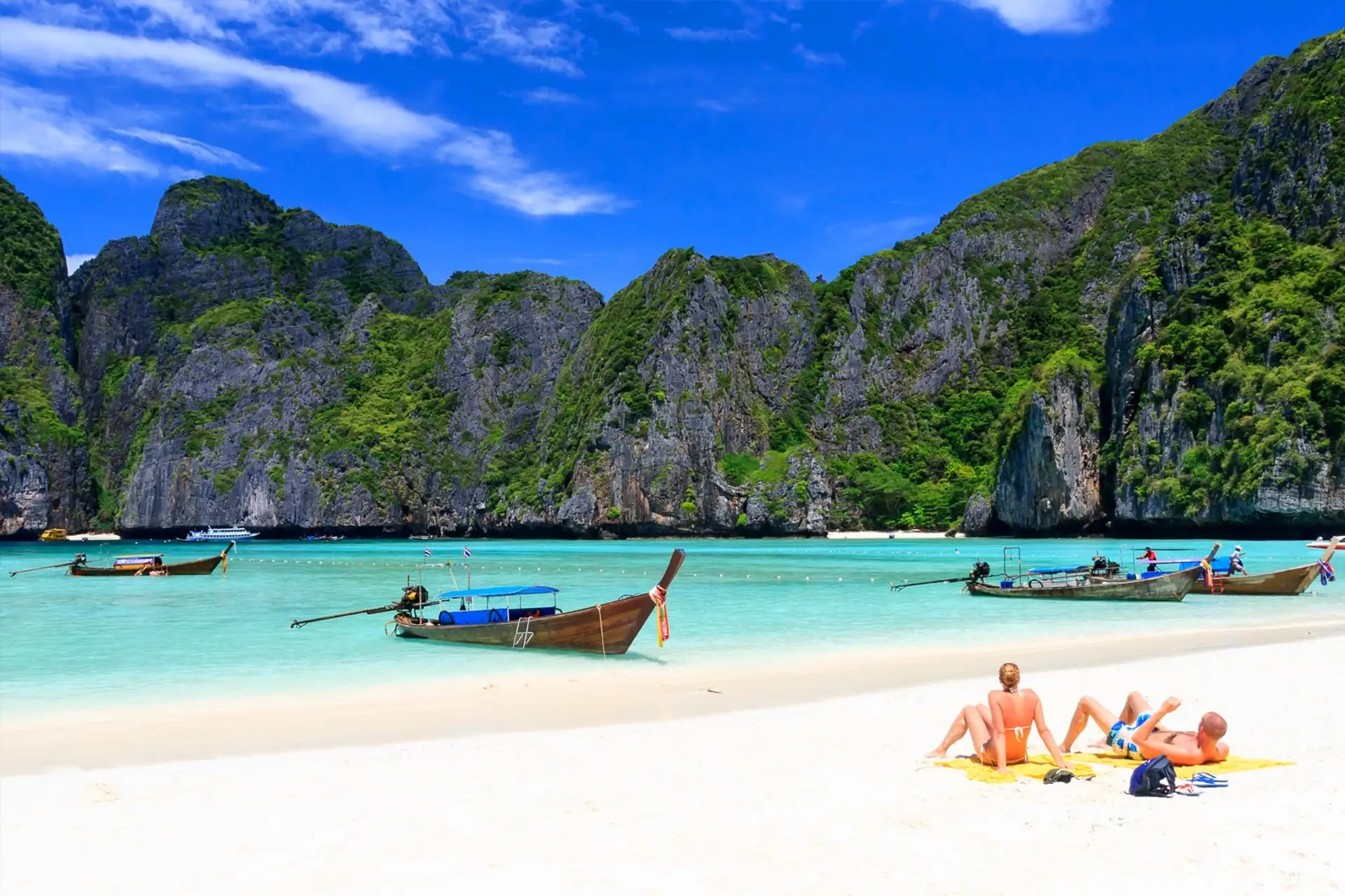
Thailand Visa for Indian Passport Holders in Dubai — Complete Guide 2026
Do Indian passport holders in Dubai need a visa for Thailand?
No visa is needed for a short holiday — but the length changed. Indian ordinary-passport holders are visa-exempt for 30 days from 15 September 2026, down from 60 (a unilateral exemption Thailand grants; not a reciprocal treaty for ordinary passports). You can still arrive at any Thai airport and receive an entry stamp without a pre-arranged visa. ⚠️ The 60-day exemption was revoked by a Ministry of Interior announcement published in the Royal Gazette on 31 August 2026; entries on or before 14 September 2026 keep the 60-day stay, and the new 30-day exemption is for tourism only. For longer stays, apply for a 60-day tourist e-Visa online at thaievisa.go.th — the e-Visa is unchanged.
Key Takeaway
- No visa is needed for a short holiday — but the length changed. Indian ordinary-passport holders are visa-exempt for 30...
- Entry status: Visa-exempt for tourism, 30 days (from 15 Sep 2026)
- Entries on or before 14 Sep 2026: Visa exemption, 60 days
- Tourist e-Visa (longer stays): USD 40 (~AED 147), 60 days
- Source: Royal Thai Government Gazette, 31 Aug 2026
Thailand is one of the most popular holiday destinations for Indian passport holders living in Dubai, and for good reason — the combination of world-class beaches, vibrant culture, exceptional food, and excellent value for money makes it an irresistible getaway from the UAE. Better still, the visa process for Indian nationals travelling to Thailand has become remarkably easy in recent years.
Indian passport holders benefit from a Thai visa exemption — a unilateral measure Thailand grants to Indian ordinary-passport holders — and can arrive with no embassy visit, no online application and no visa fee. ⚠️ The length of that stay changed: from 15 September 2026 the exemption gives 30 days, not 60. Four Ministry of Interior announcements signed on 26 August 2026 were published in the Royal Gazette on 31 August 2026; one revokes the 60-day exemption announcement of 15 July 2024 outright, and another lists India (item 23 of 60 countries and territories) in the new 30-day tier, for tourism only. Entries on or before 14 September 2026 keep the 60-day stamp. For longer or guaranteed stays, a full tourist e-Visa — still 60 days, unchanged by this reform — is available online via the official Thai e-Visa portal (thaievisa.go.th).
This guide is written specifically for Indian passport holders living in Dubai. We cover the visa exemption in detail, explain when you do and do not need a visa, walk through the tourist e-Visa option and the gazetted reduction of the exemption from 60 days to 30 that applies from 15 September 2026, list the documents you should carry, and share practical tips based on OraVisa’s experience helping hundreds of Indian nationals travel to Thailand from the UAE.
Are Indian Passport Holders Eligible for Visa-Free Entry to Thailand?
Yes — but for 30 days, not 60. From 15 September 2026 Indian ordinary-passport holders are eligible for visa-exempt entry to Thailand for stays of up to 30 days, for tourism only. This is a unilateral exemption Thailand grants (the India–Thailand bilateral exemption treaty covers only diplomatic and official passports, not ordinary passports), so Indian nationals — regardless of whether they are UAE residents or travelling from any other country — can still arrive at any Thai international airport and receive an entry stamp directly at immigration, with no advance visa, no embassy visit, and no government fee. ⚠️ The previous 60-day exemption, announced on 15 July 2024, was revoked by a Ministry of Interior announcement published in the Royal Gazette on 31 August 2026 and signed by the Prime Minister and Minister of Interior on 26 August 2026. Entries on or before 14 September 2026 keep the 60-day stay.
This is an important distinction from many other destinations where Indian passport holders must apply for a visa in advance. For Thailand, you simply need a valid Indian passport with at least 6 months of remaining validity, proof of onward or return travel, and sufficient funds for your stay. Immigration officers at Thai airports may ask to see these documents, so it is important to have them ready.
Eligibility Summary for Indian Passport Holders
- Indian nationals are visa-exempt for up to 30 days from 15 September 2026 — down from 60 days, and for tourism only; entries on or before 14 September 2026 keep the 60-day stamp
- Your Indian passport must have at least 6 months validity remaining from the date of entry
- You must have at least 1 blank page in your passport for the entry stamp
- Carry proof of a return or onward flight — immigration officers may ask to see it
- Show evidence of sufficient funds (approximately THB 20,000 or AED 2,100 per person) if requested
- UAE residence visa status does not affect eligibility — this exemption applies to all Indian passport holders
Documents Indian Passport Holders Should Carry for Thailand Entry
Even though Indian passport holders do not need a pre-arranged visa for Thailand, you should carry several documents to ensure smooth immigration clearance at the Thai airport. Immigration officers have the discretion to ask for proof of accommodation, return travel, and financial means. Having these documents ready avoids delays and demonstrates that you are a genuine tourist.
Documents for Indian Passport Holders Entering Thailand
| Document | Requirement | Indian-Specific Notes |
|---|---|---|
| Indian Passport | Minimum 6 months validity from entry date, 1+ blank page | Carry your current passport with all previous travel stamps visible — a strong travel history helps at immigration |
| Return or Onward Flight | Confirmed booking showing departure from Thailand | Book a return ticket to Dubai before travel — one-way tickets may be questioned at immigration |
| Hotel Reservation | Accommodation for at least the first few nights | Booking.com or Agoda confirmation in your name is sufficient |
| Proof of Funds | THB 20,000 (~AED 2,100) per person or THB 40,000 (~AED 4,200) per family | Carry a mix of cash and a recent bank statement on your phone — immigration rarely checks but it is wise to be prepared |
| UAE Residence Visa | Not required for Thailand entry but useful as supporting document | Carry a copy as it demonstrates stable residence outside India |
| Travel Insurance | Strongly recommended but not mandatory | Medical coverage of at least USD 10,000 is advisable for any international trip |
Indian Passport
- Requirement
- Minimum 6 months validity from entry date, 1+ blank page
- Indian-Specific Notes
- Carry your current passport with all previous travel stamps visible — a strong travel history helps at immigration
Return or Onward Flight
- Requirement
- Confirmed booking showing departure from Thailand
- Indian-Specific Notes
- Book a return ticket to Dubai before travel — one-way tickets may be questioned at immigration
Hotel Reservation
- Requirement
- Accommodation for at least the first few nights
- Indian-Specific Notes
- Booking.com or Agoda confirmation in your name is sufficient
Proof of Funds
- Requirement
- THB 20,000 (~AED 2,100) per person or THB 40,000 (~AED 4,200) per family
- Indian-Specific Notes
- Carry a mix of cash and a recent bank statement on your phone — immigration rarely checks but it is wise to be prepared
UAE Residence Visa
- Requirement
- Not required for Thailand entry but useful as supporting document
- Indian-Specific Notes
- Carry a copy as it demonstrates stable residence outside India
Travel Insurance
- Requirement
- Strongly recommended but not mandatory
- Indian-Specific Notes
- Medical coverage of at least USD 10,000 is advisable for any international trip
These documents are not formally required for the visa exemption, but Thai immigration officers can request them at their discretion. OraVisa recommends having all items ready in printed or digital format to avoid any issues at the airport.
Entry Options and Processing Times for Indian Nationals
Indian passport holders have two routes into Thailand, suited to different trip durations. The visa exemption is the standard route and, from 15 September 2026, covers tourist holidays of up to 30 days with no visa and no government fee — it covered 60 days for entries on or before 14 September 2026. The tourist e-Visa is the visa for tourist stays longer than the exempt period. It does not cover conducting business, working or formal study: those purposes need the matching non-tourist visa (for example Non-Immigrant B or ED). The Electronic Visa on Arrival is not a route you need — Indian nationals are visa-exempt, and the Visa on Arrival list in force from 15 September 2026 covers only Azerbaijan, Belarus and Serbia, not India.
Thailand Entry Options for Indian Passport Holders from Dubai
| Entry Route | Fee | Processing Time | Stay Duration | Best For |
|---|---|---|---|---|
| Visa Exemption (from 15 Sep 2026) | Free | Immediate at airport | Up to 30 days (tourism only) | The standard route for most Indian travellers |
| Tourist e-Visa (TR) | USD 40 (~AED 147) | 3-5 working days online | Up to 60 days + 30-day extension | Longer or guaranteed stays; apply at thaievisa.go.th |
| Multiple Entry Tourist e-Visa (METV) | Approximately USD 200 (~AED 734) | 5-7 working days online | 60 days per entry, 6-month validity | Frequent visitors to Thailand |
Visa Exemption (from 15 Sep 2026)
- Fee
- Free
- Processing Time
- Immediate at airport
- Stay Duration
- Up to 30 days (tourism only)
- Best For
- The standard route for most Indian travellers
Tourist e-Visa (TR)
- Fee
- USD 40 (~AED 147)
- Processing Time
- 3-5 working days online
- Stay Duration
- Up to 60 days + 30-day extension
- Best For
- Longer or guaranteed stays; apply at thaievisa.go.th
Multiple Entry Tourist e-Visa (METV)
- Fee
- Approximately USD 200 (~AED 734)
- Processing Time
- 5-7 working days online
- Stay Duration
- 60 days per entry, 6-month validity
- Best For
- Frequent visitors to Thailand
GAZETTED AND DATED: four Ministry of Interior announcements signed on 26 August 2026 were published in the Royal Gazette on 31 August 2026 with effect from 15 September 2026. One revokes the 60-day visa exemption announced on 15 July 2024; another places India (item 23 of 60 countries and territories) in a 30-day exemption tier for tourism only. Entries on or before 14 September 2026 keep the 60-day stay: the Thai Ministry of Foreign Affairs said on 3 September 2026 that those travellers may stay until the last date of their permitted period of stay shown on the immigration stamp. From 15 September 2026 Indian nationals are visa-exempt for 30 days, or can use the tourist e-Visa, which still grants 60 days and is unchanged by this reform. Always verify your current status on thaievisa.go.th before booking.
OraVisa Recommendation for Indian Nationals
- Tourist holiday of 30 days or less: use the free visa exemption — no application needed, no fee, no embassy visit
- Note: Indian nationals do not need the eVOA, because they are visa-exempt for tourism — and the gazetted Visa on Arrival list in force from 15 September 2026 covers only Azerbaijan, Belarus and Serbia, not India
- Tourist stay of more than 30 days (from 15 September 2026): apply for a 60-day tourist e-Visa online at thaievisa.go.th (the e-Visa still grants 60 days and is not affected by the 15 September 2026 change); for conducting business, working or formal study, apply for the matching non-tourist visa instead
- Multiple trips per year: consider the Multiple Entry Tourist Visa (METV) at approximately USD 200
What to Expect at Thai Immigration as an Indian Passport Holder
Arriving at a Thai airport as an Indian passport holder using the visa exemption is straightforward, but knowing what to expect helps you prepare. Immigration clearance at Bangkok Suvarnabhumi and Don Mueang airports typically takes 20 to 45 minutes during peak hours, though this can extend to over an hour during holiday periods. Understanding the process in advance makes the experience smoother.
- 1Complete the free Thailand Digital Arrival Card (TDAC) online before you travel — it replaced the paper TM6 card — at tdac.immigration.go.th. Fill in your Indian passport details, hotel address in Thailand, and flight information, and save the QR code for immigration.
- 2Join the queue marked for foreign passport holders at immigration. Indian nationals using the visa exemption go through the regular immigration line, not the eVOA or visa-on-arrival counter.
- 3Present your Indian passport, completed arrival card, return flight booking, and hotel reservation to the immigration officer.
- 4The officer will stamp your passport with the visa-exempt entry permission: 30 days for entries from 15 September 2026, and 60 days for entries on or before 14 September 2026. Verify that the stamp shows the correct entry date and the number of days permitted.
- 5The TDAC is digital, so there is no paper departure card to retain — keep your TDAC QR code accessible in case it is requested when leaving Thailand.
- 6If the immigration officer asks about your funds, show your bank statement or cash. This is rare for Indian nationals but can happen.
Common Issues and How to Avoid Them
- One-way ticket: Indian nationals arriving without a return flight may be questioned or denied entry — always book a return ticket before travel
- Passport validity: If your passport has less than 6 months validity, you may be turned away at the gate in Dubai or refused entry in Thailand — renew before booking
- Overstaying: Thailand enforces strict overstay penalties (THB 500 per day, up to THB 20,000, plus potential blacklisting). Do not exceed the number of days actually stamped in your passport under any circumstances. For entries from 15 September 2026 that stamp is 30 days, not 60; entries on or before 14 September 2026 keep the 60-day stay
- Re-entry limits: from 15 September 2026 a visa-exempt tourist entering through a land-border immigration checkpoint may do so no more than twice per calendar year (Malaysian, Bruneian, Indonesian and Singaporean nationals are excepted; Indians are not). Air arrivals are not capped by that rule, but frequent back-to-back entries may still raise suspicion of attempting to live in Thailand without a proper visa
How to Apply for a Thailand Tourist Visa from Dubai (Longer Stays)
If you plan a tourist stay in Thailand longer than the visa-exempt period, you will need a tourist visa (TR). Since 1 January 2025 these are applied for online through the official Thai e-Visa portal (thaievisa.go.th) — in-person submission at the Royal Thai Embassy in Abu Dhabi has been discontinued. The tourist e-Visa grants 60 days of stay, extendable by 30 days inside Thailand at a local immigration office — a total maximum of 90 days. OraVisa can prepare and submit your e-Visa application from Dubai.
- 1Gather all required documents: passport (6+ months validity), a recent digital passport photo, UAE residence visa copy, Emirates ID copy, bank statement (3 months), employment letter, return flight booking, and hotel reservation.
- 2Create an account and complete the tourist e-Visa application online at the official Thai e-Visa portal (thaievisa.go.th), selecting the United Arab Emirates as your country of residence.
- 3Upload your documents and digital photo, then pay the visa fee of USD 40 (~AED 147) online by card.
- 4Track your application status online; the e-Visa is typically issued within 3 to 5 working days and delivered electronically — there is no passport sticker and no embassy visit.
- 5Carry a printed or digital copy of your approved e-Visa with your passport when you travel. OraVisa can prepare and submit the full application on your behalf.
Indian nationals applying for the tourist visa face minimal difficulty at the Thai Embassy in Abu Dhabi. The approval rate is very high provided documents are complete. OraVisa recommends the tourist visa if your tourist stay will exceed the visa-exempt period — 30 days from 15 September 2026 — and the matching non-tourist visa, not the tourist visa, for conducting business, working or formal study; for shorter tourist trips, the free visa exemption is simpler and more cost-effective.
Thailand Visa Fees for Indian Passport Holders from Dubai
One of the major advantages for Indian nationals visiting Thailand is the cost — or rather, the lack of it. Under the visa exemption there is no government visa fee at all, for stays up to 30 days from 15 September 2026 (up to 60 days for entries on or before 14 September 2026). The tourist e-Visa route, for tourist stays beyond that, carries a fee — detailed below.
Thailand Visa Fee Summary for Indian Passport Holders
| Fee Component | Amount | Notes |
|---|---|---|
| Visa exemption (from 15 Sep 2026, up to 30 days) | Free | No application — simply arrive at the Thai airport; tourism only |
| Tourist e-Visa (TR) | USD 40 (~AED 147) | Apply online at thaievisa.go.th; 60-day stay |
| Multiple Entry Tourist e-Visa (METV) | Approximately USD 200 (~AED 734) | 6-month validity, 60 days per entry |
| 30-day extension inside Thailand | THB 1,900 (~AED 200) | Applied at Thai immigration office inside Thailand |
Visa exemption (from 15 Sep 2026, up to 30 days)
- Amount
- Free
- Notes
- No application — simply arrive at the Thai airport; tourism only
Tourist e-Visa (TR)
- Amount
- USD 40 (~AED 147)
- Notes
- Apply online at thaievisa.go.th; 60-day stay
Multiple Entry Tourist e-Visa (METV)
- Amount
- Approximately USD 200 (~AED 734)
- Notes
- 6-month validity, 60 days per entry
30-day extension inside Thailand
- Amount
- THB 1,900 (~AED 200)
- Notes
- Applied at Thai immigration office inside Thailand
All fees are approximate and based on Thai government rates as of February 2026. Government fees may change without notice. The visa exemption route is free and recommended for the majority of Indian travellers.
Extending Your Stay and When Indian Nationals Do Need a Visa
From 15 September 2026 the visa exemption gives 30 days rather than 60, and it is granted for tourism only — so more Indian travellers will now need a visa, particularly those combining a trip with medical treatment, extended family visits, or Muay Thai training camps. Understanding the extension rules and the specific scenarios where a visa is actually required helps you plan correctly.
When Indian Nationals Need a Visa vs When They Do Not
| Scenario | Visa Required? | Recommended Route |
|---|---|---|
| Tourist holiday up to 30 days | No | Visa exemption — free entry at the airport |
| Holiday of 31 to 60 days | Yes, from 15 Sep 2026 | Tourist e-Visa (TR), 60 days, applied online at thaievisa.go.th |
| Business meetings (short-term) | Yes, from 15 Sep 2026 | The revoked 60-day exemption covered short-term business contact; the new 30-day exemption is for tourism only. Use the appropriate non-tourist visa |
| Working in Thailand | Yes | Work permit and Non-Immigrant B visa required |
| Studying in Thailand (short course) | Yes | The 30-day exemption is granted for tourism only, so a study course falls outside it. Apply for an Education visa (Non-ED) or confirm the route with the Royal Thai Embassy |
| Medical treatment | Yes | The 30-day exemption is granted for tourism only. Confirm the correct route with the Royal Thai Embassy before booking treatment |
| Frequent visits (3+ per year by land) | Yes, in practice | From 15 Sep 2026 visa-exempt entry through a land-border immigration checkpoint is capped at twice per calendar year. Use the METV or a tourist e-Visa beyond that |
Tourist holiday up to 30 days
- Visa Required?
- No
- Recommended Route
- Visa exemption — free entry at the airport
Holiday of 31 to 60 days
- Visa Required?
- Yes, from 15 Sep 2026
- Recommended Route
- Tourist e-Visa (TR), 60 days, applied online at thaievisa.go.th
Business meetings (short-term)
- Visa Required?
- Yes, from 15 Sep 2026
- Recommended Route
- The revoked 60-day exemption covered short-term business contact; the new 30-day exemption is for tourism only. Use the appropriate non-tourist visa
Working in Thailand
- Visa Required?
- Yes
- Recommended Route
- Work permit and Non-Immigrant B visa required
Studying in Thailand (short course)
- Visa Required?
- Yes
- Recommended Route
- The 30-day exemption is granted for tourism only, so a study course falls outside it. Apply for an Education visa (Non-ED) or confirm the route with the Royal Thai Embassy
Medical treatment
- Visa Required?
- Yes
- Recommended Route
- The 30-day exemption is granted for tourism only. Confirm the correct route with the Royal Thai Embassy before booking treatment
Frequent visits (3+ per year by land)
- Visa Required?
- Yes, in practice
- Recommended Route
- From 15 Sep 2026 visa-exempt entry through a land-border immigration checkpoint is capped at twice per calendar year. Use the METV or a tourist e-Visa beyond that
From 15 September 2026 the visa exemption covers tourist holidays of up to 30 days only. A visa is required for longer stays, for employment, for study, and for any purpose other than tourism. Contact OraVisa if you are unsure which route applies to your situation.
To stay beyond the visa-exempt period, which is 30 days for entries from 15 September 2026, you can visit a Thai Immigration Bureau office inside Thailand and apply for a 30-day extension. The fee is widely reported as THB 1,900 (approximately AED 200), and the process typically takes a few hours. You will need your passport, a completed TM7 extension form, a passport photo, and proof of accommodation. Extension of stay is governed by a separate instrument that the 26 August 2026 announcements do not cover and that OraVisa has not been able to retrieve, so treat this as discretionary practice rather than an entitlement: it is granted at the discretion of the immigration officer, is not guaranteed, and should not be relied on to recover the 60 days the exemption used to give.
Thailand Visa at a Glance — Indian Passport Holders
Thailand Visa Summary for Indian Passport Holders from Dubai
| Detail | Information |
|---|---|
| Entry status (from 15 Sep 2026) | Visa-exempt — up to 30 days, tourism only (ordinary passports) |
| Instrument | Ministry of Interior announcements signed 26 Aug 2026, Royal Gazette 31 Aug 2026 — in force 15 Sep 2026 |
| Government Fee (Visa Exemption) | Free |
| Tourist e-Visa Fee (longer stays) | USD 40 (~AED 147) |
| Visa Exemption Stay | Up to 30 days from 15 Sep 2026 (60 days for entries on or before 14 Sep 2026) |
| Extension Available | Yes — 30 days (THB 1,900) at Thai immigration office |
| Passport Validity Required | Minimum 6 months from entry date |
| Tourist e-Visa Application | Online via thaievisa.go.th (in-person embassy submission discontinued 1 Jan 2025) |
| Key Point for Indians | Still visa-free, but 30 days from 15 Sep 2026 instead of 60 — and for tourism only, so check your trip purpose as well as its length |
Entry status (from 15 Sep 2026)
- Information
- Visa-exempt — up to 30 days, tourism only (ordinary passports)
Instrument
- Information
- Ministry of Interior announcements signed 26 Aug 2026, Royal Gazette 31 Aug 2026 — in force 15 Sep 2026
Government Fee (Visa Exemption)
- Information
- Free
Tourist e-Visa Fee (longer stays)
- Information
- USD 40 (~AED 147)
Visa Exemption Stay
- Information
- Up to 30 days from 15 Sep 2026 (60 days for entries on or before 14 Sep 2026)
Extension Available
- Information
- Yes — 30 days (THB 1,900) at Thai immigration office
Passport Validity Required
- Information
- Minimum 6 months from entry date
Tourist e-Visa Application
- Information
- Online via thaievisa.go.th (in-person embassy submission discontinued 1 Jan 2025)
Key Point for Indians
- Information
- Still visa-free, but 30 days from 15 Sep 2026 instead of 60 — and for tourism only, so check your trip purpose as well as its length
OraVisa: Thailand Visa Support for Indian Nationals in Dubai
While most Indian passport holders can travel to Thailand without any visa assistance, OraVisa provides dedicated support for situations where professional guidance is valuable — particularly tourist visa applications for longer stays, multiple-entry visa planning, and combining Thailand with multi-country Asian itineraries.
- Tourist visa application handling — we prepare and submit your documents at the Royal Thai Embassy in Abu Dhabi so you never need to leave Dubai
- Tourist visa application review — we check your application and photo against the requirements
- Extension guidance — we advise on the in-Thailand extension process if you need more than the 30 days the exemption gives from 15 September 2026
- Multi-country trip planning — combining Thailand with Vietnam, Cambodia, or Malaysia? We handle all visa requirements for the full itinerary
- Immigration document preparation — we provide a pre-departure checklist tailored to Indian nationals to ensure smooth Thai immigration clearance
Plan Your Thailand Trip with Confidence
Whether you need a tourist visa for a longer stay or simply want peace of mind that your documents are in order for the visa-exempt entry, OraVisa is here to help. Start with a free consultation and let our Thailand visa experts guide you through the process.
Get Free ConsultationFrequently Asked Questions
Do Indian passport holders need a visa for Thailand from Dubai?
You do not need a visa for a short tourist trip, but the length changed. From 15 September 2026 Indian ordinary-passport holders are visa-exempt for stays of up to 30 days in Thailand, down from 60 — you can still fly from Dubai and enter directly at the airport with a valid Indian passport (6+ months validity), a return flight booking, and proof of accommodation. ⚠️ The 60-day exemption was revoked by a Ministry of Interior announcement published in the Royal Gazette on 31 August 2026; entries on or before 14 September 2026 keep the 60-day stay, and the new exemption is for tourism only.
What is the Thailand eVOA and should Indian nationals use it?
Indian nationals are visa-exempt, so the exemption is the simplest route and no eVOA is needed — and the Visa on Arrival list in force from 15 September 2026 covers only Azerbaijan, Belarus and Serbia, not India. The exemption changed too: from 15 September 2026 the exemption gives 30 days, not 60, and it is granted for tourism only. For longer tourist trips, apply for a 60-day tourist e-Visa online at thaievisa.go.th in advance — the e-Visa is unchanged; conducting business, working or formal study needs the matching non-tourist visa instead.
How long can Indian passport holders stay in Thailand without a visa?
From 15 September 2026 Indian passport holders can stay up to 30 days under Thailand’s visa exemption (a unilateral measure for ordinary passports, granted for tourism only), with no visa required. Entries on or before 14 September 2026 keep the 60-day stay. ⚠️ The 60-day exemption was revoked by a Ministry of Interior announcement published in the Royal Gazette on 31 August 2026. A one-time 30-day extension at a Thai immigration office for THB 1,900 (approximately AED 200) is widely reported, but extension of stay sits under a separate instrument and should not be counted on to restore the old 60 days. For longer stays, apply for a 60-day tourist e-Visa online at thaievisa.go.th.
Can I extend my Thailand stay as an Indian passport holder?
Usually, but do not plan around it. If you entered Thailand under the visa exemption (30 days from 15 September 2026), you can apply at any Thai Immigration Bureau office inside Thailand for a 30-day extension; the fee is widely reported as THB 1,900 (approximately AED 200). Bring your passport, a completed TM7 form, a passport photo, and proof of accommodation. Extension of stay is governed by a separate instrument that the 26 August 2026 announcements do not cover, so this is discretionary practice rather than an entitlement — it is granted at the officer’s discretion and is not a guaranteed way to recover the 60 days the exemption used to give.
What documents should Indian passport holders carry when entering Thailand?
No visa documents are required for a tourist stay within the visa-exempt period (30 days from 15 September 2026, 60 days for entries on or before 14 September 2026). Carry your Indian passport (6+ months validity), confirmed return flight booking, hotel reservation, and proof of sufficient funds (approximately THB 20,000 or AED 2,100 per person). Immigration officers may ask to see these items, though they rarely do for Indian nationals with clean travel histories.
Is there a limit on how many times Indian nationals can enter Thailand visa-free?
By land, yes: from 15 September 2026 a visa-exempt tourist entering Thailand through a land-border immigration checkpoint may do so no more than twice per calendar year (nationals of Malaysia, Brunei, Indonesia and Singapore are excepted; Indian nationals are not). The gazetted limit sets no number for arrivals by air, but do not treat air entries as unlimited: frequent back-to-back air entries may still raise suspicion at Thai immigration that you are attempting to live in Thailand without a proper visa. If you travel to Thailand frequently, OraVisa recommends obtaining a Multiple Entry Tourist Visa.
Need Expert Visa Assistance?
OraVisa handles everything from document preparation to submission; you attend in person only where the mission requires biometrics or an interview. Get a free consultation today.
Get Free ConsultationTools to Help You Prepare
Get a personalised list of every document you need for this visa.
See a full cost breakdown — government fees, VFS charges & more in AED.
Check standard, express & peak processing times and when to apply.
All tools are free — no login required. View all tools →
Related Visa Guides
Latest Visa Updates
Written by
Priya Sharma
Senior Visa Consultant — Asia & Americas
Senior Visa Consultant specializing in Asian & American destinations. 8 years of experience with a proven track record in complex multi-country applications.
Expert reviewed by Ahmed Al Rashid
Senior Visa Consultant
Last updated: · 12+ years of visa consultancy experience
Last updated: