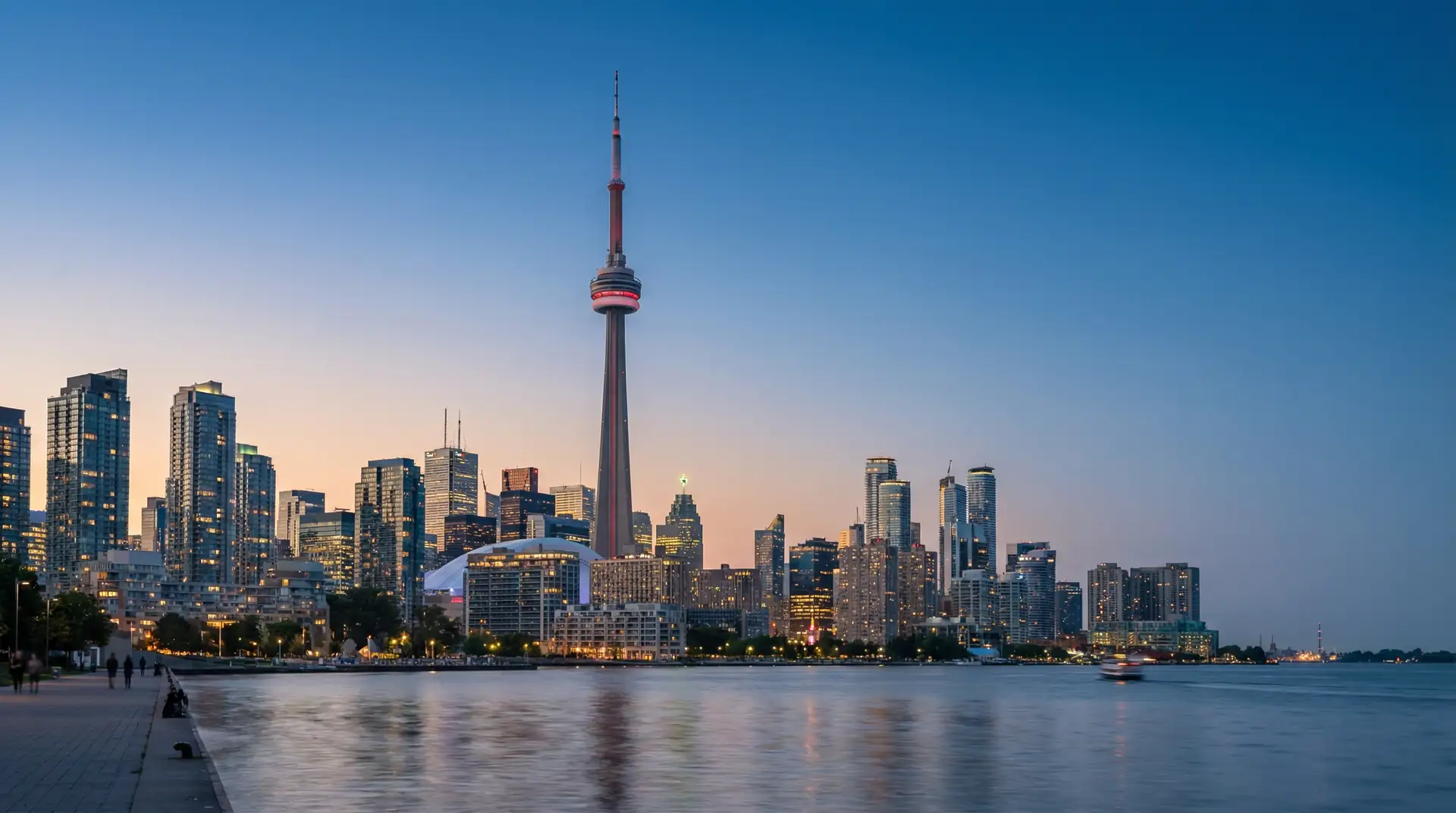
Canada Visa for Indian Passport Holders in Dubai
Can Indian passport holders in Dubai apply for a Canada visa locally?
Yes. Indian nationals with a valid UAE residence visa can apply for a Canada Temporary Resident Visa (TRV) entirely from Dubai without returning to India. The process is online via the IRCC portal, followed by biometrics at VFS Canada Dubai. The visa fee is CAD 100 (approximately AED 275) plus CAD 85 (approximately AED 235) for biometrics. Standard processing takes 30 to 75 days. No interview is required — the decision is made on your documents.
Key Takeaway
- Yes. Indian nationals with a valid UAE residence visa can apply for a Canada Temporary Resident Visa (TRV) entirely from...
- Visa Type: TRV (tourist visa)
- Visa Fee: CAD 100 (~AED 275)
- Biometrics Fee: CAD 85 (~AED 235)
- Processing Time: 30–75 days
Indians make up the largest expat community in the UAE — and also the single largest group applying for Canada tourist visas from Dubai. Whether you are planning a family reunion in Toronto, a summer road trip through British Columbia, or a business trip to Vancouver, you need a Canada Temporary Resident Visa (TRV). And as an Indian passport holder based in the UAE, your application has several requirements that simply do not appear in generic Canada visa guides.
Applying from Dubai is not the same as applying from India. IRCC (Immigration, Refugees and Citizenship Canada) expects you to demonstrate ties to the UAE — not to India — as your reason to return after your visit. Your UAE bank statements, employer NOC, Emirates ID, and UAE residence visa are the pillars of a strong application. Miss any of these, and your file is weakened before a visa officer even reads your purpose of travel.
This guide covers every India-specific requirement for a Canada TRV applied from Dubai: the additional documents you need on top of the standard checklist, how biometrics work at VFS Canada in Dubai, why processing may take longer for Indian passports, how prior Schengen or US visas help you, and the most common reasons Indian applicants get refused — along with how to avoid every one of them.
Why Applying from Dubai Is Different for Indians
When an Indian passport holder applies for a Canada TRV from India, IRCC officers assess ties to India — family, property, employment, and financial roots there. When you apply from Dubai, the entire frame of reference shifts. The officer now evaluates your ties to the UAE. Your stability in Dubai — your employment, your residence visa tenure, your UAE bank account, your family based here — is what convinces IRCC you will return after your Canadian trip.
This distinction matters enormously. Applicants who submit Indian bank statements as their primary financial proof, or who rely on ties to India rather than the UAE, often receive refusals even when their overall financial profile is strong. Your application must reflect your life as it currently exists in Dubai, not your life back home.
Dubai vs India: The Key Differences for Indian TRV Applicants
- Bank statements must be from your UAE bank account — Indian bank statements are supplementary at best
- Employment documentation must reference your UAE employer, salary in AED, and UAE company letterhead
- Your UAE residence visa validity and Emirates ID are mandatory documents, not optional
- Ties to Dubai — Ejari tenancy contract, Emirates ID, employment tenure — replace ties to India in the officer's assessment
- Interview wait times in Dubai are generally shorter than major Indian cities, and no interview is required for Canada TRV at all
- You do not need to travel to India to apply — the full Canada TRV process is completed in Dubai
Eligibility: Who Can Apply from Dubai?
Not every Indian national in the UAE is eligible to apply for a Canada TRV from Dubai. IRCC requires that you are legally resident in the country from which you submit your application. Meeting these eligibility criteria is the starting point before gathering any documents.
- Valid UAE residence visa — your residence visa must be valid at the time of submitting your IRCC online application and on the date of your biometrics appointment at VFS Canada Dubai. Expired or cancelled residence visas disqualify you from applying in Dubai.
- Physical presence in the UAE — you must be currently residing in the UAE. IRCC processes your application from the UAE, and a biometrics appointment at VFS Canada Dubai is a mandatory step.
- Visit visa holders are not eligible — if you are in the UAE on a tourist or visit visa rather than a residence visa, you should apply for your Canada TRV from India instead.
- Residence visa validity guidance — while there is no hard minimum, IRCC strongly prefers applicants whose UAE residence visa has at least 6 months of remaining validity beyond their planned Canada travel date. A residency that expires during or shortly after the processing period can raise concerns.
- New UAE residents — if you have recently moved to the UAE, you can apply as soon as your residence visa is stamped and your Emirates ID is issued. However, having at least 3 months of UAE bank statements and a confirmed employment letter will substantially strengthen your case.
Canada TRV Eligibility Check for Indians in Dubai
| Situation | Can Apply from Dubai? | Notes |
|---|---|---|
| Valid UAE residence visa + employed | Yes | Ideal profile — strongest applications come from this group |
| Valid UAE residence visa + self-employed | Yes | Trade licence, business bank statements, and audited accounts required |
| Valid UAE residence visa + student in UAE | Yes | Sponsor (parent/guardian) must provide financials and employment proof |
| UAE residence visa expiring within 2 months | Possible but risky | Renew your UAE residency first; expired residency during processing causes issues |
| On UAE tourist or visit visa | No | Apply from India or wait until UAE residency is established |
| Residence visa cancelled / under cancellation | No | Must apply from India |
Valid UAE residence visa + employed
- Can Apply from Dubai?
- Yes
- Notes
- Ideal profile — strongest applications come from this group
Valid UAE residence visa + self-employed
- Can Apply from Dubai?
- Yes
- Notes
- Trade licence, business bank statements, and audited accounts required
Valid UAE residence visa + student in UAE
- Can Apply from Dubai?
- Yes
- Notes
- Sponsor (parent/guardian) must provide financials and employment proof
UAE residence visa expiring within 2 months
- Can Apply from Dubai?
- Possible but risky
- Notes
- Renew your UAE residency first; expired residency during processing causes issues
On UAE tourist or visit visa
- Can Apply from Dubai?
- No
- Notes
- Apply from India or wait until UAE residency is established
Residence visa cancelled / under cancellation
- Can Apply from Dubai?
- No
- Notes
- Must apply from India
Your UAE residence visa status is verified by IRCC during processing. Providing accurate information is essential — any discrepancy is treated as a credibility concern.
Document Checklist for Indian Passport Holders Applying from Dubai
The standard Canada TRV document checklist applies to all nationalities. But Indian passport holders in Dubai must also include a second layer of UAE-specific documents that prove legal residency and financial stability in the UAE. Missing these extras is the single most common mistake OraVisa sees from Indian applicants.
Standard Documents (All Nationalities)
- 1Valid Indian passport — valid for at least 6 months beyond your planned return date from Canada. Scan and upload all pages that contain visa stamps, entry and exit stamps, or endorsements. Bring your old passport(s) if you have previous travel history in them.
- 2Completed IMM 5257 (Visitor Visa Application) form — submitted online via the IRCC portal.
- 3Completed IMM 5645 (Family Information) form — lists all immediate family members including those not travelling with you.
- 4Two passport-sized photographs — 35mm × 45mm, white background, taken within the last 6 months. Required for biometrics at VFS Canada Dubai.
- 5Travel itinerary — proposed travel dates, cities to visit, accommodation details, and planned activities. Confirmed flights are not required at the time of application.
- 6Accommodation proof — hotel reservations, Airbnb bookings, or an invitation letter with full details from a host in Canada (name, address, Canadian immigration status, contact number, and relationship to you).
- 7Travel insurance — not mandatory for a Canada TRV but strongly recommended. Travel insurance covering at least CAD 100,000 of medical expenses is required for the Super Visa and advisable for all visitors.
- 8Cover letter — a concise letter stating your purpose of visit, travel plan, financial capacity, and strong ties to the UAE that ensure your return to Dubai.
Additional UAE-Specific Documents for Indian Passport Holders
UAE-Specific Documents Required for Indian TRV Applicants from Dubai
| Document | Specification | Why It Matters |
|---|---|---|
| Emirates ID (front and back) | Valid, unexpired Emirates ID card — scan both sides clearly | Primary proof of legal UAE residency; mandatory for IRCC applications submitted from Dubai |
| UAE Residence Visa page | Clear scan of the residence visa stamp in your Indian passport | Confirms you are legally resident in the UAE and eligible to apply locally |
| UAE Bank Statements | Last 6 months from your primary UAE bank account, stamped and signed by the bank | Your primary financial proof — must show regular salary credits, a healthy consistent balance, and no sudden large unexplained deposits |
| Employer NOC / Employment Letter | On UAE company letterhead, signed by HR or management — stating your job title, monthly salary in AED, employment start date, approved leave dates, and confirmation that your position is secured upon return | Proves stable employment in the UAE and your reason to return to Dubai after your Canadian visit |
| Salary Slips / WPS Records | Last 3 months of pay slips or Wage Protection System (WPS) salary records | Supports the employment letter with verifiable, government-tracked salary evidence |
| Ejari / Tenancy Contract | Valid RERA-registered Ejari tenancy contract showing your current UAE address | Demonstrates residential stability in Dubai; particularly important if you do not own property |
| UAE Trade Licence (if self-employed) | Current UAE trade licence with your name listed as owner or partner | Required for self-employed applicants instead of an employment letter; include last 6 months of business bank statements |
| Previous Visa Copies (US, UK, Schengen) | Colour copies of valid or recently expired visas from developed nations | Travel compliance history significantly reduces TRV refusal risk; prior approvals from other strict countries are highly favourable |
Emirates ID (front and back)
- Specification
- Valid, unexpired Emirates ID card — scan both sides clearly
- Why It Matters
- Primary proof of legal UAE residency; mandatory for IRCC applications submitted from Dubai
UAE Residence Visa page
- Specification
- Clear scan of the residence visa stamp in your Indian passport
- Why It Matters
- Confirms you are legally resident in the UAE and eligible to apply locally
UAE Bank Statements
- Specification
- Last 6 months from your primary UAE bank account, stamped and signed by the bank
- Why It Matters
- Your primary financial proof — must show regular salary credits, a healthy consistent balance, and no sudden large unexplained deposits
Employer NOC / Employment Letter
- Specification
- On UAE company letterhead, signed by HR or management — stating your job title, monthly salary in AED, employment start date, approved leave dates, and confirmation that your position is secured upon return
- Why It Matters
- Proves stable employment in the UAE and your reason to return to Dubai after your Canadian visit
Salary Slips / WPS Records
- Specification
- Last 3 months of pay slips or Wage Protection System (WPS) salary records
- Why It Matters
- Supports the employment letter with verifiable, government-tracked salary evidence
Ejari / Tenancy Contract
- Specification
- Valid RERA-registered Ejari tenancy contract showing your current UAE address
- Why It Matters
- Demonstrates residential stability in Dubai; particularly important if you do not own property
UAE Trade Licence (if self-employed)
- Specification
- Current UAE trade licence with your name listed as owner or partner
- Why It Matters
- Required for self-employed applicants instead of an employment letter; include last 6 months of business bank statements
Previous Visa Copies (US, UK, Schengen)
- Specification
- Colour copies of valid or recently expired visas from developed nations
- Why It Matters
- Travel compliance history significantly reduces TRV refusal risk; prior approvals from other strict countries are highly favourable
All documents should be submitted as clear, legible PDFs. Arabic-language documents (bank statements issued in Arabic, NOC letters in Arabic) must be accompanied by a certified English translation.
How the Employer NOC Should Be Written
The employer No Objection Certificate (NOC) or employment letter is one of the most important documents in a Canada TRV application from Dubai. For Indian applicants, IRCC officers pay particular attention to this document because it establishes your professional ties to the UAE — the primary reason you will return from Canada.
A well-written employer NOC from a Dubai company should be printed on official company letterhead and must include: your full name (as it appears on your passport), your job title and department, your date of joining the company, your current monthly salary in AED, the specific approved leave dates for your Canada trip, a statement confirming your position is secured and that you are expected to return to work on a specified date, and the signature of the authorising person (HR Manager or direct manager) along with the company stamp.
NOC Checklist: What IRCC Expects to See
- Company letterhead with the UAE company name, address, phone number, and trade licence number
- Your full name matching your Indian passport exactly — no abbreviations or nicknames
- Your job title, department, and official employment start date
- Monthly salary in AED (not annually, not in INR)
- Specific approved leave dates: "Leave approved from [DATE] to [DATE]"
- Explicit statement that your position is secure and you are expected to return by a specific date
- Signed by HR Manager or company management with name, title, and company stamp
- Date of the letter — should be within 1 month of your application submission
A generic NOC that only states "we have no objection to the employee travelling" without salary, leave dates, or return confirmation is frequently flagged by IRCC officers as insufficient. If your employer is hesitant to provide detailed information, OraVisa can provide you with a template that your HR department can customise while meeting all IRCC requirements.
Biometrics at VFS Canada Dubai
Biometrics enrollment is a mandatory step for Indian passport holders applying for a Canada TRV. After submitting your IRCC online application, you will receive a Biometric Instruction Letter (BIL) by email within a few days. You must complete biometrics at VFS Canada Dubai within 30 days of this letter — failure to do so results in your application being abandoned with no fee refund.
- Location — VFS Canada Application Centre (CVAC) is located in Damac Smart Heights, Barsha Heights (TECOM area), Dubai. Always verify the exact address and current operating hours on the official VFS Canada website (canada.vfsglobal.com) before attending.
- Operating hours — the CVAC typically operates Sunday to Thursday, 08:00 to 15:00. Hours may change during UAE public holidays. Confirm current hours when booking your appointment.
- What to bring — your valid Indian passport, your printed or digital Biometric Instruction Letter (BIL), your appointment confirmation, and the biometrics fee payment confirmation (CAD 85, paid during the IRCC online application).
- What happens at the appointment — VFS staff verify your documents, scan all ten fingerprints digitally, and take a digital photograph. The process takes approximately 15 to 20 minutes. No documents are submitted physically at VFS — all supporting documents are uploaded during the online IRCC application.
- No interview at VFS — Canada does not conduct face-to-face visa interviews for TRV applicants. The biometrics appointment is purely biometric capture. The visa decision is made by an IRCC officer reviewing your online application and documents.
- Biometrics validity — biometrics collected for a Canadian application are valid for 10 years. If you apply for another Canadian visa within this period, you will not need to provide biometrics again (unless you have turned 14 or your biometrics have otherwise expired).
- Children under 14 — are exempt from biometrics. Children aged 14 and above must attend the biometrics appointment.
- Peak period booking — VFS Canada Dubai appointment slots fill up rapidly between June and August and during winter holidays. Book your biometrics appointment as early as possible after receiving your BIL.
Processing Time for Indian Passports — What to Expect
Canada TRV processing times for Indian passport holders from Dubai can be longer than the general estimates published by IRCC. India is among the highest-volume source countries for Canadian immigration applications globally, and applications from Indian nationals often receive additional background checks. Understanding this reality allows you to plan your travel timeline accurately.
Canada TRV Processing Times for Indian Passport Holders from Dubai (2026)
| Period | Estimated Processing Time | OraVisa Recommendation |
|---|---|---|
| Low season (Jan–Apr, Oct–Nov) | 30–45 days | Apply at least 6 weeks before travel |
| Moderate season (May, Sep) | 45–60 days | Apply at least 8–10 weeks before travel |
| Peak season (Jun–Aug, Dec–Jan) | 60–90 days | Apply 12–14 weeks before travel; Indian passports may reach the upper end |
| Applications with background checks | 90–150+ days | IRCC may issue a procedural fairness letter; respond promptly with additional documents |
| Applications with previous refusals | 60–120 days | Stronger documentation and a detailed cover letter addressing the prior refusal are essential |
Low season (Jan–Apr, Oct–Nov)
- Estimated Processing Time
- 30–45 days
- OraVisa Recommendation
- Apply at least 6 weeks before travel
Moderate season (May, Sep)
- Estimated Processing Time
- 45–60 days
- OraVisa Recommendation
- Apply at least 8–10 weeks before travel
Peak season (Jun–Aug, Dec–Jan)
- Estimated Processing Time
- 60–90 days
- OraVisa Recommendation
- Apply 12–14 weeks before travel; Indian passports may reach the upper end
Applications with background checks
- Estimated Processing Time
- 90–150+ days
- OraVisa Recommendation
- IRCC may issue a procedural fairness letter; respond promptly with additional documents
Applications with previous refusals
- Estimated Processing Time
- 60–120 days
- OraVisa Recommendation
- Stronger documentation and a detailed cover letter addressing the prior refusal are essential
Processing is measured from the date biometrics are completed, not the date the online application was submitted. IRCC publishes current estimates at canada.ca/immigration — check before applying. There is no official priority processing lane for Canada tourist visas.
A key reason Indian passport holders sometimes experience longer processing is travel history scrutiny. Officers reviewing applications from India-passported individuals pay close attention to previous visits to Canada, previous refusals of any country, and any immigration-related history. Providing a thorough travel history with copies of visas and entry stamps from compliant previous trips significantly reduces the risk of an extended processing period.
If IRCC requires additional information after reviewing your file, they will issue a Procedural Fairness Letter giving you a specified timeframe to respond. Ignoring this letter — or providing a weak response — typically results in refusal. OraVisa monitors client application statuses and responds to IRCC correspondence promptly.
How Travel History Helps Indian Applicants
For Indian passport holders, previous travel history to developed countries is one of the most powerful elements of a Canada TRV application. If you hold a valid or recently expired Schengen visa, a US B1/B2 visa, or a UK Standard Visitor Visa, you should include copies of those visas in your application. Here is why this matters.
IRCC officers use prior compliance with other immigration systems as a strong indicator of whether you will respect Canadian immigration rules. If you obtained a Schengen visa, travelled to Europe, and returned to the UAE before your visa expired, that is direct evidence that you are a compliant traveller who does not overstay. The same logic applies to US and UK visas. This travel history reduces the perceived immigration risk of your application significantly.
Travel History That Strengthens a Canada TRV Application
- Valid or recent Schengen visa (especially from Western European countries such as Germany, France, Netherlands) — strongest positive indicator
- Valid or recent US B1/B2 visa — highly favourable; the US has a rigorous visa process and prior approval signals compliance
- Valid or recent UK Standard Visitor Visa — similarly strong; UK immigration is strict and its approval carries weight
- Previous Canada TRV — if you visited Canada before and departed on time, include the visa and any entry stamps
- Australia, New Zealand, Japan visitor visas — positive but less impactful than Schengen, US, or UK
- No prior visas at all — not disqualifying, but requires a particularly strong financial and employment profile to compensate
If you do not yet hold any of these visas, consider whether your travel timeline allows you to obtain one before applying for Canada. Many Dubai-based Indians successfully obtain Schengen visas for European holidays first, then use that compliance record to secure their Canada TRV. However, do not delay your Canada application solely for this reason if your travel need is urgent.
Common Rejection Reasons for Indian Applicants — and How to Avoid Them
Canada TRV refusals for Indian passport holders from Dubai are more common than for some other nationalities, but the reasons are consistent and predictable. IRCC officers must be satisfied that you will leave Canada at the end of your authorised stay and that your visit is genuinely temporary. When they are not satisfied on these points, your application is refused.
Common Canada TRV Refusal Reasons for Indians in Dubai — and Solutions
| Refusal Reason | Why It Happens | How to Address It |
|---|---|---|
| Insufficient ties to the UAE | Officer not convinced you will return to Dubai — recent residency, no employment letter, no property proof, no family in UAE | Provide employment NOC with return date, Ejari, Emirates ID, salary slips, and if applicable, school enrollment of children in UAE |
| Weak financial proof | Indian bank statements submitted instead of UAE bank statements; low balance; sudden large deposits before applying | Provide 6 months of UAE bank statements with consistent salary credits; avoid lump-sum deposits; supplement with fixed deposits or investments if available |
| Vague purpose of travel | No specific itinerary, no accommodation proof, no clear reason for visiting Canada | Provide city-specific itinerary with accommodation addresses, activities planned, and if visiting family, an invitation letter with host's Canadian status |
| Failure to disclose previous refusals | IRCC application asks about visa refusals from any country — undisclosed refusals are treated as misrepresentation, a far more serious issue than the refusal itself | Always disclose all previous visa refusals from any country, including Canada, and provide a clear explanation of what has changed since the refusal |
| Inconsistent information | Salary on the application differs from bank statement credits; name spelling differs between documents; employer details conflict | Cross-check every field on your IRCC forms against your documents before submitting; any discrepancy is a red flag |
| Expired UAE residence visa during processing | UAE residency expired after submission; IRCC questions legal residency status in Dubai | Renew your UAE residency before applying; ensure your residency has at least 6 months beyond your planned Canada travel date |
| No or poor travel history | No prior international travel on the Indian passport; no record of compliance with other countries' immigration rules | Include copies of any previous visas and travel stamps; if limited history, compensate with exceptionally strong financial and employment documentation |
Insufficient ties to the UAE
- Why It Happens
- Officer not convinced you will return to Dubai — recent residency, no employment letter, no property proof, no family in UAE
- How to Address It
- Provide employment NOC with return date, Ejari, Emirates ID, salary slips, and if applicable, school enrollment of children in UAE
Weak financial proof
- Why It Happens
- Indian bank statements submitted instead of UAE bank statements; low balance; sudden large deposits before applying
- How to Address It
- Provide 6 months of UAE bank statements with consistent salary credits; avoid lump-sum deposits; supplement with fixed deposits or investments if available
Vague purpose of travel
- Why It Happens
- No specific itinerary, no accommodation proof, no clear reason for visiting Canada
- How to Address It
- Provide city-specific itinerary with accommodation addresses, activities planned, and if visiting family, an invitation letter with host's Canadian status
Failure to disclose previous refusals
- Why It Happens
- IRCC application asks about visa refusals from any country — undisclosed refusals are treated as misrepresentation, a far more serious issue than the refusal itself
- How to Address It
- Always disclose all previous visa refusals from any country, including Canada, and provide a clear explanation of what has changed since the refusal
Inconsistent information
- Why It Happens
- Salary on the application differs from bank statement credits; name spelling differs between documents; employer details conflict
- How to Address It
- Cross-check every field on your IRCC forms against your documents before submitting; any discrepancy is a red flag
Expired UAE residence visa during processing
- Why It Happens
- UAE residency expired after submission; IRCC questions legal residency status in Dubai
- How to Address It
- Renew your UAE residency before applying; ensure your residency has at least 6 months beyond your planned Canada travel date
No or poor travel history
- Why It Happens
- No prior international travel on the Indian passport; no record of compliance with other countries' immigration rules
- How to Address It
- Include copies of any previous visas and travel stamps; if limited history, compensate with exceptionally strong financial and employment documentation
All IRCC fees — the CAD 100 application fee and CAD 85 biometrics fee — are non-refundable regardless of whether the visa is approved or refused. A refusal also makes subsequent applications more difficult, underscoring the importance of a thorough first application.
Tips to Strengthen Your Canada TRV Application as an Indian in Dubai
Beyond meeting the basic requirements, the strongest Canada TRV applications from Indian passport holders in Dubai share several common qualities. These are the specific steps OraVisa recommends to every Indian client for a well-presented file.
- 1Apply early — at minimum 10 to 12 weeks before your planned Canada departure during peak season. Indian passport processing from Dubai frequently reaches the upper end of IRCC's published time estimates. Non-refundable travel bookings before visa approval are a significant financial risk.
- 2Provide 6 months of UAE bank statements — IRCC guidance says 3 months, but 6 months gives the officer a far more complete picture of your financial stability. Six months of consistent salary credits is far more compelling than a recent lump-sum deposit.
- 3Write a detailed cover letter — a one to two page letter that clearly explains your travel purpose, your specific plans in Canada, your relationship to anyone you will visit there, and — critically — the specific UAE ties that ensure your return to Dubai. This letter is your chance to speak directly to the officer's concerns.
- 4Show your UAE roots — attach your Ejari tenancy contract, children's school enrollment in the UAE (if applicable), and any UAE property ownership documents. The more embedded your life appears in Dubai, the more convincing your case.
- 5Include all prior visa and travel history — gather every visa stamp and entry/exit record you have. If your travel stamps are in an old passport, include scans of that old passport alongside your current one.
- 6Ensure document consistency — every figure, name, date, and employer detail must match across all documents. Inconsistencies between your employment letter, salary slip, bank statement, and application form are among the most common triggers for refusals.
- 7Never book non-refundable travel before approval — this cannot be emphasised enough. IRCC does not expedite processing for applicants with booked flights, and losing non-refundable travel costs on a refusal is an entirely avoidable situation.
Want a Stronger Canada TRV Application?
OraVisa specialises in Canada visa applications for Indian passport holders in Dubai. We review your documents, write your cover letter, complete and submit your IRCC forms, and book your VFS biometrics appointment.
Get Free ConsultationFrequently Asked Questions
Can Indian passport holders apply for a Canada visa from Dubai without going to India?
Yes. Indian nationals with a valid UAE residence visa can apply for a Canada Temporary Resident Visa (TRV) entirely from Dubai. The application is submitted online through the IRCC portal, and the only in-person step is a biometrics appointment at VFS Canada Dubai. There is no requirement to travel to India at any stage of the process. Your IRCC application must reflect your current UAE residency — your Emirates ID, UAE bank statements, and employer NOC from your Dubai employer are the core documents.
How long does it take to get a Canada visa for an Indian passport holder in Dubai?
Processing times for Indian passport holders from Dubai typically range from 30 to 75 days under standard conditions. During peak periods — June through August and December through January — processing can extend to 90 days or longer. Applications with incomplete documents, previous refusals, or background check requirements can take 90 to 150 days or more. There is no priority processing option for Canada tourist visas. OraVisa recommends applying at least 12 weeks before peak-season travel dates.
What UAE-specific documents do Indian passport holders need for a Canada TRV?
In addition to the standard Canada TRV documents, Indian passport holders in Dubai must include: a valid Emirates ID (front and back scan), the UAE residence visa page from their passport, six months of UAE bank statements (stamped and signed by the bank), an employer NOC or employment letter from their UAE company confirming salary in AED, leave approval dates, and a guaranteed return to work. WPS salary records, an Ejari tenancy contract, and copies of previous visas (Schengen, US, UK) further strengthen the application.
Does a previous Schengen or US visa help Indians get a Canada visa from Dubai?
Yes, significantly. A valid or recently expired Schengen visa, US B1/B2 visa, or UK Standard Visitor Visa is one of the most powerful supporting elements in a Canada TRV application from Dubai. It demonstrates a history of compliant international travel — that you obtained visas from strict immigration authorities, travelled, and returned without overstaying. IRCC officers use this track record to assess immigration risk. Include copies of all previous visas and relevant travel stamps in your application.
Is there an interview for the Canada visa for Indians applying from Dubai?
No. Canada does not conduct face-to-face visa interviews for tourist visa (TRV) applicants at VFS Canada Dubai. The only in-person step is the biometrics appointment at VFS Canada Dubai, which takes approximately 15 to 20 minutes and involves fingerprint scanning and a digital photograph. The visa decision is made by an IRCC officer who reviews your online application and uploaded documents remotely. This makes the quality of your documents and the completeness of your application particularly important.
What are the most common reasons Indians in Dubai get their Canada visa refused?
The most frequent refusal reasons for Indian TRV applicants from Dubai are: weak ties to the UAE (insufficient evidence you will return to Dubai after your visit), financial proof based on Indian rather than UAE bank statements, a vague or incomplete travel itinerary and accommodation plan, failure to disclose previous visa refusals from any country, and inconsistencies between the information on the IRCC forms and the supporting documents. A detailed cover letter addressing all these points, supported by strong UAE employment and financial documents, substantially reduces refusal risk.
Can I apply for a Canada visa from Dubai if my UAE residence visa is being renewed?
It is not advisable to apply during the residence visa renewal process. IRCC expects you to hold a valid UAE residence visa throughout the application period. If your residency is in the middle of renewal, wait until your new residence visa and updated Emirates ID are issued before submitting your IRCC application. Applying with documentation that shows an expired or about-to-expire UAE residency raises questions about your legal status in Dubai and can lead to delays or refusals.
Need Expert Visa Assistance?
OraVisa handles everything from document preparation to submission; you attend in person only where the mission requires biometrics or an interview. Get a free consultation today.
Get Free ConsultationTools to Help You Prepare
Get a personalised list of every document you need for this visa.
See a full cost breakdown — government fees, VFS charges & more in AED.
Check standard, express & peak processing times and when to apply.
All tools are free — no login required. View all tools →
Related Visa Guides
Latest Visa Updates
Written by
Priya Sharma
Senior Visa Consultant — Asia & Americas
Senior Visa Consultant specializing in Asian & American destinations. 8 years of experience with a proven track record in complex multi-country applications.
Expert reviewed by Ahmed Al Rashid
Senior Visa Consultant
Last updated: · 12+ years of visa consultancy experience
Last updated: