Canada Launches "Free Flow" Airport Transit — Faster Connections at Three Hubs from 26 June 2026
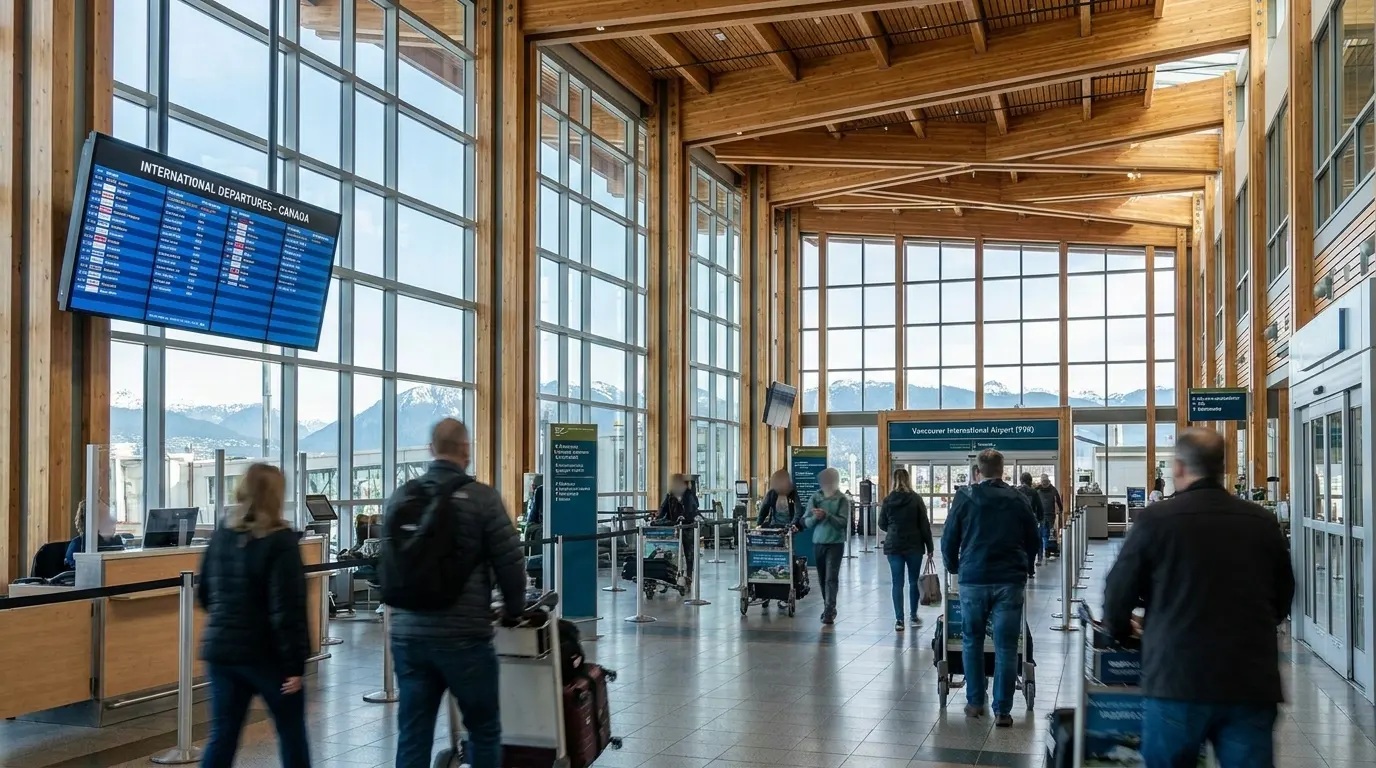
From 26 June 2026, the Canada Border Services Agency lets international passengers connecting through Vancouver, Toronto Pearson (Terminal 1) and Montréal–Trudeau skip the in-person customs check-in under its new Free Flow International-to-International Transit process. OraVisa notes UAE travellers still need their usual eTA or transit visa — only the airport step changes, not the entry rules.
What Changed on 26 June 2026
The Canada Border Services Agency (CBSA) has simplified how international passengers connect to onward flights through Canadian airports. Under its new Free Flow International-to-International Transit process, announced on 26 June 2026, eligible travellers no longer have to physically meet a border services officer or check in at a kiosk when moving between two international flights. Instead, airlines collect each passenger’s final destination and scheduled departure time and share that information directly with the CBSA, confirming the traveller has left the country as intended.
The process has been tested and is now available at three hubs — Vancouver International Airport (YVR), Toronto Pearson International Airport, Terminal 1 (YYZ), and Montréal–Trudeau International Airport (YUL). The underlying regulatory amendments were published in the Canada Gazette for a 30-day consultation, and the CBSA says other airports can now apply to adopt the process.
Key Facts
- Eligible international transit passengers at the three hubs no longer stop at a border officer or kiosk — airlines pass their onward-flight details to the CBSA.
- Live now at Vancouver (YVR), Toronto Pearson Terminal 1 (YYZ) and Montréal–Trudeau (YUL); other airports may apply to join.
- You must hold a confirmed ticket for an international flight departing Canada within 24 hours of arrival and remain within the international departure area until you board.
- UNCHANGED: you still need a valid Electronic Travel Authorization (eTA) — including Emirati and other visa-exempt passport holders — or a Temporary Resident Visa (TRV) where required. Free Flow waives no visa requirement.
- Most non-visa-exempt UAE-resident nationalities (Indian, Pakistani, and others) still need a Canadian transit visa to connect through Canada at all unless they qualify for an existing exemption.
What This Means for UAE Residents
For UAE residents, the practical benefit is time. Travellers who connect through Vancouver, Toronto Pearson Terminal 1, or Montréal–Trudeau on the way to a third country — for example, flying Dubai or Abu Dhabi to Toronto and onward to the United States, the Caribbean, or Latin America — can move straight to their departure gate rather than queuing for a customs check-in. Emirates and Etihad both operate direct flights from the UAE to Toronto, so Canada is a realistic hub for some onward routings.
It is important to be clear about what this change does not do. Free Flow is a faster airport process — it is not visa-free transit. Your obligation to hold the correct Canadian travel authorisation is exactly the same as before. Emirati nationals and other visa-exempt passport holders still need a valid eTA. Indian, Pakistani, Filipino, Egyptian and most other UAE-resident nationalities still need a Temporary Resident Visa (TRV) to transit Canada unless they qualify for an existing exemption such as the Transit Without Visa programme, which is limited to specific nationalities, airlines and routings. If you would have needed a transit visa for Canada last week, you still need it now.
You also continue to need the proper visa and travel documents for your final destination, plus a confirmed onward ticket departing Canada within 24 hours. The Free Flow process simply removes the in-person check-in step for those who already meet every entry and transit requirement.
What You Should Do Now
- 1Check your nationality’s Canada transit requirement before booking — an eTA for visa-exempt passports (including Emirati), or a Temporary Resident Visa (TRV) for most other UAE-resident nationalities.
- 2Confirm your itinerary is a genuine international-to-international connection through Vancouver, Toronto Pearson Terminal 1, or Montréal–Trudeau, with an onward international flight departing within 24 hours.
- 3Carry the valid visa and travel documents for your final destination, plus your onward boarding pass — airline staff at UAE check-in may still ask to see them.
- 4Apply for your eTA or transit visa well ahead of travel; the Free Flow process does not replace it.
- 5Let OraVisa plan your full Dubai or Abu Dhabi → Canada → onward itinerary, including the Canadian transit authorisation and your destination visa.
Connecting Through Canada on Your Next Trip?
OraVisa helps UAE residents plan complex multi-country journeys — Canadian transit authorisations, destination visas, and document preparation. Get expert guidance before you book.
Get Free ConsultationOfficial Disclaimer
This update is based on publicly available information from the Canada Border Services Agency and credible international reporting as of 30 June 2026. The Free Flow International-to-International Transit process is available at Vancouver International Airport, Toronto Pearson International Airport (Terminal 1) and Montréal–Trudeau International Airport, and removes the in-person customs check-in for eligible transit passengers only. It does not change any eTA or transit-visa requirement. This analysis is provided for informational purposes to help UAE residents understand the change. It does not constitute legal advice. For the latest official information, refer to the Canada Border Services Agency.
Sources
- Canada Border Services Agency — The CBSA is making it quicker and easier for international travellers to catch connecting flights at Canadian airports— Verified 2026-06-30
- Canada Border Services Agency — International-to-international flight connections made easier— Verified 2026-06-30
- CIC News — Three Canadian airports allow transiting international passengers to skip border control— Verified 2026-06-30
Verified Official Sources
- Canada Border Services Agency — The CBSA is making it quicker and easier for international travellers to catch connecting flights at Canadian airports — 26 June 2026 [Visit Source](Verified: 30 Jun 2026)
- Canada Border Services Agency — International-to-international flight connections made easier (CBSA traveller information) [Visit Source](Verified: 30 Jun 2026)
- CIC News — Three Canadian airports allow transiting international passengers to skip border control [Visit Source](Verified: 30 Jun 2026)
Related Pages
Affected Countries
Nationality Guides
Related Guides
Relevant Services
Pre-Trip Briefings for affected countries
Frequently Asked Questions
Do I still need an eTA or transit visa to connect through Canada under Free Flow?
Yes. The Free Flow International-to-International Transit process only removes the in-person customs check-in — it does not change any travel-authorisation requirement. Visa-exempt passport holders, including Emirati nationals, still need a valid Electronic Travel Authorization (eTA). Indian, Pakistani, Filipino, Egyptian and most other UAE-resident nationalities still need a Temporary Resident Visa (TRV) to transit Canada unless they qualify for an existing exemption.
Which Canadian airports offer the Free Flow transit process?
As of 26 June 2026, the process is available at Vancouver International Airport (YVR), Toronto Pearson International Airport Terminal 1 (YYZ), and Montréal–Trudeau International Airport (YUL). The CBSA says other airports can apply to adopt the process in future.
Does Free Flow let me leave the airport or enter Canada during my connection?
No. The process applies only to passengers connecting between two international flights who remain within the international departure area. It does not grant entry into Canada. If you intend to leave the airport, you must meet Canada’s normal entry requirements, including the appropriate visa or eTA.
What is the 24-hour rule?
To use the Free Flow process you must hold a confirmed ticket for an international flight departing Canada within 24 hours of your arrival, and you must stay within the designated international departure area until you board. If your connection exceeds 24 hours, the process does not apply.
Do Indian or Pakistani passport holders benefit from this change?
Only if they are already eligible to transit Canada. The Free Flow process speeds up the airport step but does not waive the transit-visa requirement. Most Indian and Pakistani passport holders still need a Canadian Temporary Resident Visa (TRV) to connect through Canada, unless they qualify for an existing exemption such as the Transit Without Visa programme. Confirm your requirement before booking.
Need Help Understanding This Change?
OraVisa stays on top of every visa policy change so you don't have to. Get a free consultation about how this affects your travel plans.
Get Free ConsultationWritten by
Priya Sharma
Senior Visa Consultant — Asia & Americas
Senior Visa Consultant specializing in Asian & American destinations. 8 years of experience with a proven track record in complex multi-country applications.
Last verified: