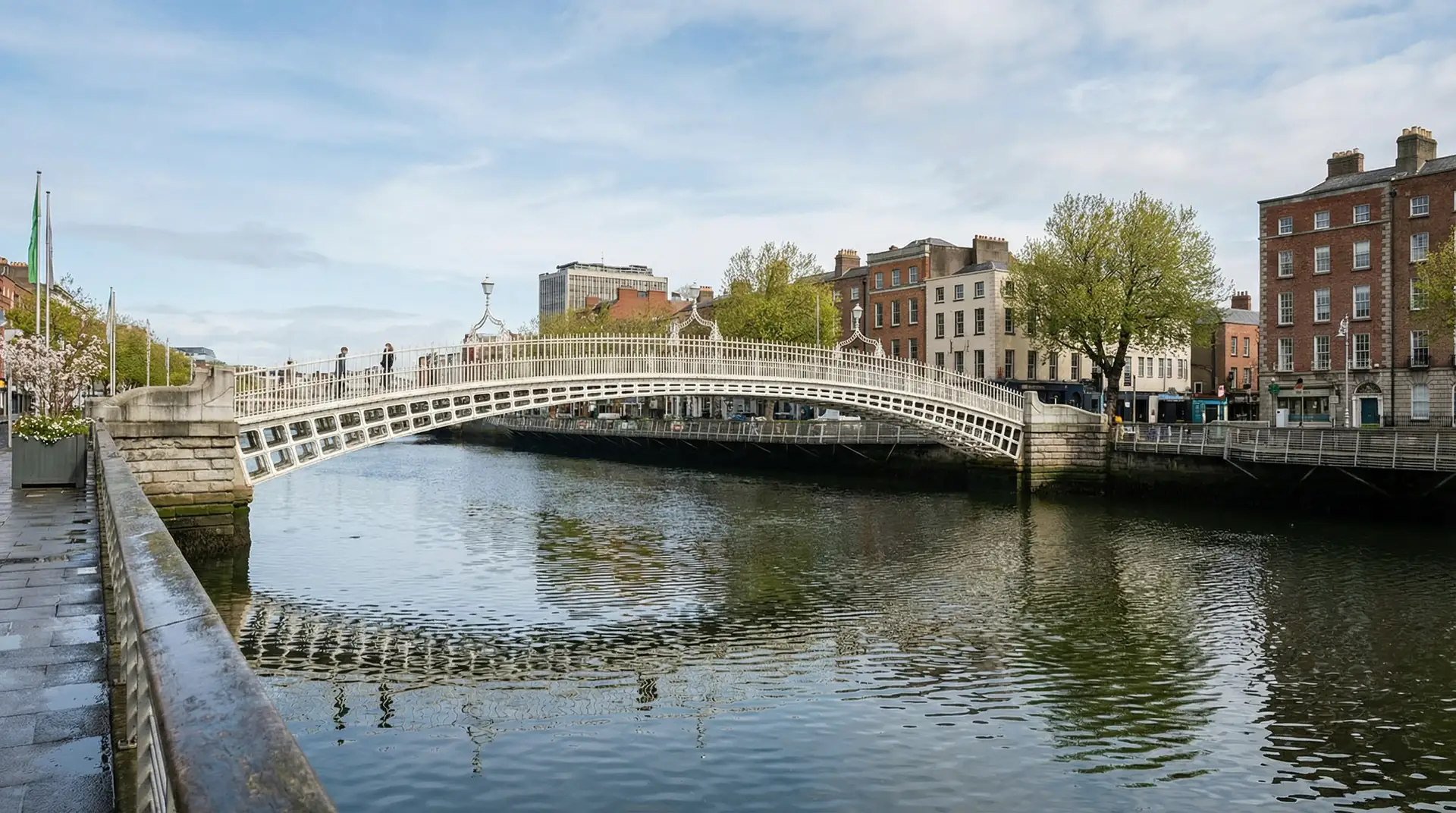
Ireland Visa for Indian Passport Holders in Dubai
Do Indian passport holders in Dubai need an Ireland visa?
It depends on whether you hold a UK visa. Indian nationals with a valid UK Standard Visitor visa or UK BRP can enter Ireland under the SSVWP without a separate Irish visa. If you do not have a UK visa, you must apply for an Ireland Short Stay C visa via AVATS (EUR 60 single entry). Processing takes 6 to 8 weeks. There is no Ireland visa fee waiver for Indian nationals (unlike Japan, which grants a free visa).
Key Takeaway
- It depends on whether you hold a UK visa. Indian nationals with a valid UK Standard Visitor visa or UK BRP can enter Ire...
- SSVWP Eligible?: Yes (with valid UK visa)
- Ireland Visa Fee: EUR 60 single entry
- Processing Time: 6–8 weeks
- Max Stay: 90 days
Ireland is one of the most rewarding travel destinations Indian passport holders can visit from Dubai — the green countryside, Viking-era cities, and welcoming culture make it a strong alternative to the more heavily visited Western European capitals. And for many Indians living in Dubai, the visa situation is simpler than expected.
Indian nationals are on Ireland's Short Stay Visa Waiver Programme (SSVWP) eligibility list. This means that if you hold a valid UK Standard Visitor visa or a UK Biometric Residence Permit (BRP), you can enter Ireland without a separate Irish visa. Given that a significant proportion of Indian professionals in Dubai have previously obtained UK visas for business or leisure travel, this waiver makes Ireland highly accessible at zero additional visa cost.
If you do not have a UK visa, you will need to apply for an Ireland Short Stay C visa through the AVATS online system. This guide covers both scenarios in full — SSVWP eligibility for Indian nationals with UK visas, and the complete AVATS application process for those who need to apply for an Irish visa directly.
SSVWP: How Indian Nationals Can Visit Ireland with Just a UK Visa
The Short Stay Visa Waiver Programme (SSVWP) is a formal Irish government arrangement that allows nationals of certain countries — India included — to enter Ireland without a separate Irish visa, provided they hold a valid UK Standard Visitor visa or a valid UK Biometric Residence Permit (BRP). For Indian professionals in Dubai who have previously obtained a UK visa, this is a significant practical benefit.
India has been on the SSVWP eligibility list since the programme was established, reflecting the large Indian diaspora in the UK and the natural travel patterns of Indians who visit both countries. As of 2026, the programme remains active for Indian nationals. However, programme conditions can change, and OraVisa always recommends verifying the current SSVWP status on irishimmigration.ie before booking travel.
SSVWP for Indian Nationals: Conditions You Must Meet
- You must hold an Indian passport (passport nationality matters — not just UAE residency)
- Your UK Standard Visitor visa or UK BRP must be valid (current, not expired) when you enter Ireland
- You may stay in Ireland for a maximum of 90 days per SSVWP visit
- You can fly directly from Dubai to Dublin — you do not need to enter the UK first
- At Dublin Airport border control, you may be asked to show your UK visa alongside your passport
- The SSVWP does not permit working, long-term study, or establishing residency in Ireland
SSVWP vs Ireland C Visa: Which Applies to You?
| Your Situation | Route to Ireland | Cost | Processing Time |
|---|---|---|---|
| Indian passport + valid UK Standard Visitor visa | SSVWP — no separate Irish visa | Free | Instant (if UK visa is valid) |
| Indian passport + valid UK BRP (residence permit) | SSVWP — no separate Irish visa | Free | Instant (if BRP is valid) |
| Indian passport + expired UK visa | Apply for Ireland Short Stay C visa | EUR 60 | 6–8 weeks |
| Indian passport + no UK visa | Apply for Ireland Short Stay C visa | EUR 60 | 6–8 weeks |
| Indian passport + Schengen visa only | Apply for Ireland Short Stay C visa | EUR 60 | 6–8 weeks |
Indian passport + valid UK Standard Visitor visa
- Route to Ireland
- SSVWP — no separate Irish visa
- Cost
- Free
- Processing Time
- Instant (if UK visa is valid)
Indian passport + valid UK BRP (residence permit)
- Route to Ireland
- SSVWP — no separate Irish visa
- Cost
- Free
- Processing Time
- Instant (if BRP is valid)
Indian passport + expired UK visa
- Route to Ireland
- Apply for Ireland Short Stay C visa
- Cost
- EUR 60
- Processing Time
- 6–8 weeks
Indian passport + no UK visa
- Route to Ireland
- Apply for Ireland Short Stay C visa
- Cost
- EUR 60
- Processing Time
- 6–8 weeks
Indian passport + Schengen visa only
- Route to Ireland
- Apply for Ireland Short Stay C visa
- Cost
- EUR 60
- Processing Time
- 6–8 weeks
The SSVWP applies at the time of travel. Your UK visa must be currently valid when you arrive in Ireland. A UK visa that expires the day before your Dublin flight does not qualify.
Applying for an Ireland Short Stay C Visa as an Indian National in Dubai
If you do not hold a valid UK visa or BRP, you will need to apply for an Ireland Short Stay C visa through the AVATS online portal operated by the Irish Naturalisation and Immigration Service. The process is the same as for other nationalities, but there are aspects of the application that are particularly important for Indian nationals given the assessment patterns seen in Irish Embassy decisions.
- 1Create an AVATS account at irishimmigration.ie and complete the online application form fully and accurately
- 2Upload all supporting documents as scanned PDFs or JPEGs through the AVATS portal
- 3Pay the EUR 60 single entry fee (or EUR 100 for multiple entry) online by card
- 4Print the application summary and prepare your original passport for submission
- 5Courier your original passport and any required original documents to the Embassy of Ireland in Abu Dhabi
- 6Track your application through the AVATS portal using your reference number
- 7Allow 6 to 8 weeks for processing from the date the Embassy receives your passport
Important: Ireland does not have an embassy in Dubai. Indian nationals in the UAE submit their Ireland visa applications to the Embassy of Ireland in Abu Dhabi. OraVisa handles the courier to Abu Dhabi and the passport return on behalf of Dubai-based applicants, removing the need to manage this logistics step yourself.
Ireland Visa Documents for Indian Nationals in Dubai
The standard Ireland visa document checklist applies to all nationalities, including Indians. However, certain elements are particularly scrutinised for Indian passport holders, reflecting the Irish Embassy's experience with the volume and pattern of Indian applications from the UAE.
- Completed AVATS application form (submitted online, then printed)
- Original Indian passport — valid for at least 12 months beyond your intended departure from Ireland, with at least 2 blank pages
- Copies of all previous Indian passports (if applicable) showing travel history
- UAE residence visa copy and Emirates ID (front and back) — confirming your legal UAE residency
- UAE bank statements for the last 6 months — original, bank-stamped, showing consistent income and healthy balance
- Salary slips for the last 3 months — stamped by employer
- Employment letter on company letterhead — confirming your role, salary, specific approved leave dates, and that your position is retained during your absence
- If self-employed: UAE trade licence, company bank statements (6 months), CA/auditor letter confirming income
- Hotel booking confirmations or accommodation proof for every night of your stay in Ireland
- Round-trip flight reservation (Dubai to Dublin and return)
- Day-by-day travel itinerary for your Ireland visit
- Travel insurance covering Ireland for the full duration of stay (minimum EUR 30,000 medical coverage)
- Cover letter: a personal letter explaining the purpose of your visit, who you are visiting (if applicable), and your plans to return to the UAE
Documents Indian Nationals Often Overlook
- Cover letter: writing a personalised cover letter explaining your visit purpose is strongly recommended for Indian applicants — it adds credibility to your application
- Travel history: include photocopies of previous Schengen, UK, or US visa stamps from your passport — a strong travel history significantly improves approval chances
- Property or tenancy agreement in the UAE: demonstrates your commitment to returning after the visit
- Family ties in India or UAE: school letters for children, family photograph — shows you have substantive ties beyond employment
- Emirates ID must be valid — an expired Emirates ID raises questions about your current legal status in the UAE
Financial Requirements: How Much Money Do You Need to Show?
The Irish Immigration Service does not publish a specific minimum bank balance for Ireland visa applications. However, based on OraVisa's experience with India UAE applicants, certain financial patterns consistently produce stronger results than others.
Financial Benchmarks for Irish Visa Applications (Indian Nationals in Dubai)
| Financial Factor | Recommended Standard | Why It Matters |
|---|---|---|
| Average monthly bank balance | AED 10,000–15,000+ | Shows ability to fund trip without financial stress |
| Bank statement period | 6 months (minimum) | Irish Embassy requires 6 months — not 3 months like some Schengen countries |
| Salary credited to bank account | Consistent monthly credits | Irregular income or cash salary raises questions |
| Budget for Ireland trip | AED 1,000–1,500 per day | A 10-day trip should show AED 10,000–15,000 available beyond fixed costs |
| Savings account balance | Positive; stable or growing | Supplements current account to show overall financial strength |
| Large deposits immediately pre-application | Avoid (funds parking) | Sudden large cash deposits in the weeks before applying are a red flag |
Average monthly bank balance
- Recommended Standard
- AED 10,000–15,000+
- Why It Matters
- Shows ability to fund trip without financial stress
Bank statement period
- Recommended Standard
- 6 months (minimum)
- Why It Matters
- Irish Embassy requires 6 months — not 3 months like some Schengen countries
Salary credited to bank account
- Recommended Standard
- Consistent monthly credits
- Why It Matters
- Irregular income or cash salary raises questions
Budget for Ireland trip
- Recommended Standard
- AED 1,000–1,500 per day
- Why It Matters
- A 10-day trip should show AED 10,000–15,000 available beyond fixed costs
Savings account balance
- Recommended Standard
- Positive; stable or growing
- Why It Matters
- Supplements current account to show overall financial strength
Large deposits immediately pre-application
- Recommended Standard
- Avoid (funds parking)
- Why It Matters
- Sudden large cash deposits in the weeks before applying are a red flag
These are OraVisa guidance benchmarks, not official Irish Embassy thresholds. The Embassy assesses each application holistically. An applicant with a lower balance but very strong employment and travel history may be approved, while one with a high balance but a weak overall application may be refused.
Why Irish Visas Are Refused for Indian Nationals: Common Reasons
The Irish Embassy does refuse Ireland visa applications from Indian nationals, and refusal rates for applicants with weak documentation or inconsistent information can be significant. Understanding the most common grounds for refusal helps you build a stronger application.
- Insufficient financial evidence: thin bank balances, irregular income, or statements that do not cover 6 months
- Weak employment ties: an employment letter without specific leave dates, or a very recent hire date with no established work history in the UAE
- No or minimal travel history: first-time international travellers are assessed more conservatively; include any previous Schengen, UK, US, or other visas from your passport
- Vague itinerary: a generic one-line purpose ("sightseeing") without a day-by-day plan is a common weakness
- Undisclosed previous refusals: any visa refusal from Ireland, the UK, Schengen, or the US must be disclosed accurately
- Inconsistent information: dates on your AVATS form that do not match your hotel bookings or flight reservation
- Thin ties to the UAE: applicants who cannot demonstrate strong reasons to return to the UAE — employment, family, property — face a higher refusal risk
A cover letter addressing any potential concerns in your application is a powerful tool. If you have a previous refusal, explain what has changed since then. If you have a thin bank balance due to a recent job change, explain the context. The visa officer is a person making a holistic judgement — context matters.
Apply for Your Ireland Visa with OraVisa
OraVisa specialises in Irish visa applications for Indian nationals in Dubai and across the UAE. We assess your SSVWP eligibility first — if your UK visa qualifies, you may not need an Irish visa at all. If you do need to apply, we handle your full AVATS application, document review, cover letter preparation, passport courier to Abu Dhabi, and return delivery.
Our team is experienced with the specific documentation patterns the Irish Embassy expects from Indian applicants in the UAE and knows which weaknesses in an application are addressable and which require additional evidence before submission.
Start Your Ireland Visa Application as an Indian in Dubai
Find out if your UK visa qualifies for the SSVWP, or get expert help with your Ireland Short Stay C visa application. OraVisa provides free SSVWP eligibility assessments and full application support for Indian passport holders in Dubai.
Get a Free QuoteFrequently Asked Questions
Can Indian passport holders enter Ireland with a UK visa from Dubai?
Yes. India is on the Short Stay Visa Waiver Programme (SSVWP) eligibility list. If you hold a valid UK Standard Visitor visa or UK Biometric Residence Permit (BRP), you can enter Ireland without a separate Irish visa. You can fly directly from Dubai to Dublin — you do not need to travel via the UK. Your UK visa must be valid at the time of your Ireland arrival.
How much does an Ireland visa cost for Indians in Dubai?
If you qualify for the SSVWP (via a valid UK visa), the Ireland visa is free of charge. If you need to apply for a standalone Irish Short Stay C visa, the fee is EUR 60 for single entry (approximately AED 240) or EUR 100 for multiple entry (approximately AED 400). There is no Indian-specific Ireland visa fee waiver — unlike Japan, which provides a free single-entry visa to Indian nationals under a bilateral agreement.
How long does an Ireland visa take for Indian nationals in Dubai?
If you qualify for the SSVWP, there is no waiting period — you travel on your existing UK visa. If applying for a standalone Ireland Short Stay C visa, processing takes 6 to 8 weeks from the date the Embassy of Ireland in Abu Dhabi receives your complete application and original passport. There is no express option. OraVisa recommends applying at least 10 weeks before your travel date.
What is the maximum stay allowed in Ireland for Indian nationals?
Under the Ireland Short Stay C visa, Indian nationals can stay for a maximum of 90 days per visit. The same 90-day maximum applies under the SSVWP. Ireland does not offer a long-stay tourist visa. If you wish to stay longer than 90 days in Ireland, you would need to apply for an appropriate long-stay visa (such as a work permit or student visa) from within Ireland or from your home country.
Do I need to disclose previous UK or Schengen visa refusals on my Ireland visa application?
Yes. The AVATS application form requires you to disclose all previous visa refusals from any country, including UK, Schengen, US, and Ireland. Deliberately omitting a previous refusal is considered misrepresentation and will result in an automatic Ireland visa refusal, as well as a potentially long-term ban on future Irish visa applications. If you have had previous refusals, include a cover letter explaining the context and what has changed since then.
Which UAE bank statements are accepted for an Ireland visa for Indians?
All licensed UAE banks are accepted. The statements must be original, stamped and signed by the bank — digital PDFs generated by your online banking app are not accepted by the Irish Embassy. Banks typically charge AED 25 to AED 50 for an official stamped statement covering 6 months. Visit your branch in person and request a "certified bank statement for visa purposes." Emirates NBD, FAB, ADCB, Mashreq, Dubai Islamic Bank, and Abu Dhabi Islamic Bank statements are all regularly used for Ireland visa applications by Indian nationals in the UAE.
Need Expert Visa Assistance?
OraVisa helps you prepare everything from document preparation to appointment readiness. Get a free consultation today.
Get Free ConsultationTools to Help You Prepare
All tools are free — no login required. View all tools →
Related Visa Guides
Latest Visa Updates
Written by
Priya Sharma
Senior Visa Consultant — Asia & Americas
Senior Visa Consultant specializing in Asian & American destinations. 8 years of experience with a proven track record in complex multi-country applications.
Expert reviewed by Ahmed Al Rashid
Senior Visa Consultant
Last updated: · 12+ years of visa consultancy experience
Last updated: