Ireland Removes Right to Appeal Most Short-Stay Visa Refusals — Effective 1 June 2026
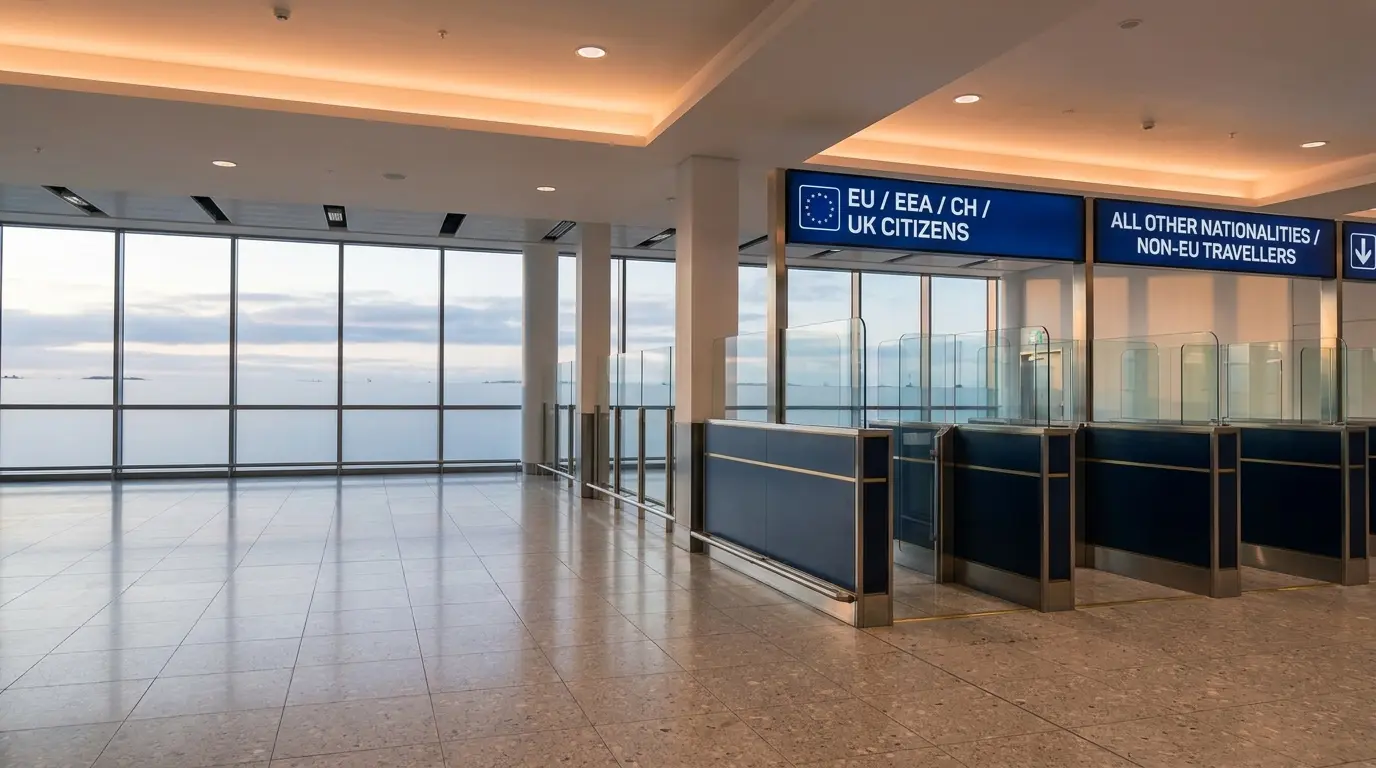
From 1 June 2026, the Irish Immigration Service is removing the right to appeal most short-stay (Type C) visa refusals. The change does not apply to applications made by third-country nationals who fall within the EU Free Movement Directive (2004/38/EC). Refusal decisions issued before 1 June 2026 remain appealable under the existing arrangements. OraVisa explains who is affected among UAE residents, the narrow carve-out, and what to do if you are facing or anticipating a refusal.
What Has Changed and When
On 29 May 2026, the Irish Immigration Service updated its official appeals page to confirm a policy change first announced by Colm Brophy, Minister of State for Migration at the Department of Justice, Home Affairs and Migration. With effect from 1 June 2026, applicants who are refused a short-stay (Type C) visa to Ireland will no longer be able to appeal that decision. The right of appeal continues to apply to all long-stay (Type D) visa refusals — including employment visas, long-term study visas, and family categories other than visit-family — and to short-stay applications made by third-country nationals who fall within the EU Free Movement Directive (2004/38/EC).
Before and After: The Two-State Change
Short-stay (Type C) visa refusal — appeal rights
Effective 1 June 2026
| Policy aspect | Before | After |
|---|---|---|
| Right to appeal a refusal | Available to every short-stay applicant within a 2-month window from the date of the letter of refusal | Removed for most applicants; preserved only for EU Free Movement Directive family-member applications |
| Appeal fee | No fee | Not applicable — appeal route is removed for most applicants |
| Practical alternative after refusal | Submit appeal, or submit a fresh AVATS application | Submit a fresh AVATS application taking into account the reasons for the original refusal |
| Long-stay (Type D) appeals — employment, long-term study, family | Available under the existing arrangements | Unchanged — appeal route continues |
Right to appeal a refusal
- Before
- Available to every short-stay applicant within a 2-month window from the date of the letter of refusal
- After
- Removed for most applicants; preserved only for EU Free Movement Directive family-member applications
Appeal fee
- Before
- No fee
- After
- Not applicable — appeal route is removed for most applicants
Practical alternative after refusal
- Before
- Submit appeal, or submit a fresh AVATS application
- After
- Submit a fresh AVATS application taking into account the reasons for the original refusal
Long-stay (Type D) appeals — employment, long-term study, family
- Before
- Available under the existing arrangements
- After
- Unchanged — appeal route continues
The change applies prospectively. Per the Department of Justice and the Irish Immigration Service, any refusal decision issued on a short-stay (Type C) visa before 1 June 2026 remains eligible for appeal under the existing arrangements, and the standard appeal window of two months from the date of the refusal letter continues to apply to those pre-cutoff refusals.
Who Is Affected
UAE-resident audience: who falls into which group
Affected
- Indian, Pakistani, Bangladeshi, Filipino, Egyptian, Nepali, Sri Lankan, Nigerian and other visa-required UAE residents — refused on or after 1 June 2026
- Any third-country national in the UAE whose short-stay application is refused on or after 1 June 2026 and who is not within the EU Free Movement Directive carve-out
Not affected
- UAE residents who are de facto partners, spouses, or other family members of an EU, EEA, Swiss or UK citizen and are applying under the EU Free Movement Directive (2004/38/EC) — appeals continue
- UAE residents applying for any long-stay (Type D) Irish visa — employment, long-term study, family categories other than visit-family — appeals continue
Conditional
- UAE residents already holding a short-stay refusal letter dated before 1 June 2026 — still eligible to appeal within two months of the date on the refusal letter, under the existing arrangements. Submit your appeal as soon as practical to use the remaining window.
The Irish Immigration Service notes the change does not introduce new categories of refusal. The grounds on which a short-stay application may be refused are unchanged. What changes is the absence of an appeal route to challenge the decision; affected applicants are directed to submit a fresh application instead.
What This Means for UAE Residents
For the major UAE-resident nationality groups — Indian, Pakistani, Filipino, Bangladeshi, Egyptian, and others required to obtain an Irish short-stay visa for tourism, family visits or business meetings — the practical consequence is straightforward: the first application matters more. A weak file that previously had a corrective appeal route now has none. From 1 June 2026, the only remedy after a refusal is to start the process again with a new AVATS application that addresses the reasons stated in the original refusal letter.
UAE residents who are currently holding a refusal letter dated before 1 June 2026 should not wait. The two-month appeal window from the refusal date continues to apply to those pre-cutoff refusals, but only under the existing arrangements — submit the appeal letter, supporting documents and any new evidence as soon as practical to use the remaining window. The Visa Appeals Office address remains: Visa Appeals Office, Immigration Service Delivery, 13-14 Burgh Quay, Dublin 2, D02 XK70, Ireland. Appeals must be submitted by post only — fax and email submissions are not accepted.
The Government's Rationale
Announcing the change, Minister Brophy said: "In many cases, short-stay visas are for a specific trip — a holiday, a family visit, or an event — and by the time the appeal is decided, that opportunity has often passed. This change is about being practical and making better use of our resources. Instead of a lengthy appeals process, applicants will have the option to submit a new application and get a decision much more quickly."
The Department of Justice confirmed to The Journal that in 2025 the Irish visa service processed around 137,000 short-stay applications, of which roughly 115,000 were granted and around 22,000 refused. Over 3,000 short-stay appeal decisions were issued in the same period. By removing the short-stay appeal route, the Department anticipates that appeals officers will be able to concentrate on more complex long-stay (Type D) appeals, with the goal of reducing processing times for employment, long-term study and family-category cases.
What You Should Do Now
- 1Identify which category your situation falls into. Are you holding a pre-1-June 2026 refusal letter? Within the EU Free Movement Directive carve-out? Applying for long-stay rather than short-stay? Each path has a different action.
- 2If you hold a pre-cutoff refusal: submit your appeal under the existing arrangements without delay. The 2-month window continues to apply to refusals issued before 1 June 2026, but only those pre-cutoff refusals.
- 3If you are facing or anticipating a refusal on or after 1 June 2026: prepare the strongest first application possible. The corrective appeal route is no longer available; the alternative is a fresh AVATS application that explicitly addresses every concern raised in the refusal letter.
- 4If you are a family member of an EU, EEA, Swiss or UK citizen: confirm your application is being processed under the EU Free Movement Directive (2004/38/EC). The appeal route continues to apply to applications correctly filed under that channel.
- 5If you are applying for a long-stay (Type D) Irish visa — employment, long-term study, family — proceed as normal. The appeal route for long-stay refusals is unchanged.
Apply for an Irish visa from the UAE with professional support
With the appeal route removed for most short-stay refusals from 1 June 2026, the first application matters more than ever. OraVisa supports UAE residents across all visa-required nationalities — Indian, Pakistani, Filipino, Bangladeshi, Egyptian and others — with end-to-end Irish short-stay and long-stay visa preparation, document review, and risk assessment before submission.
Request an Ireland Visa AssessmentOfficial Sources and References
Sources
- Irish Immigration Service — "Appeal a negative decision" (Immigration Service Delivery, Department of Justice; page last updated 29 May 2026)— Verified 2026-05-28
- EIN Presswire — "Minister Colm Brophy announces removal of appeals for certain short stay visa refusals" (Government of Ireland Department of Justice, Home Affairs and Migration press release)— Verified 2026-05-28
- TheJournal.ie — "Government withdraws right to appeal against some short stay visa refusals" (Irish news outlet; carries 2025 short-stay application statistics confirmed by the Department of Justice)— Verified 2026-05-28
- European Commission — Migration and Home Affairs — "Ireland sees changes to migration policies and improved digital inclusion" (May 2026 Ireland migration policy update)— Verified 2026-05-28
This update is based on publicly available information from the Irish Immigration Service, the Department of Justice (Home Affairs and Migration), TheJournal.ie and the European Commission, all verified as of 28 May 2026. The change takes effect on 1 June 2026. Refusal decisions issued before that date remain eligible for appeal under the existing arrangements. This analysis is provided for informational purposes to help UAE residents understand the policy change. It does not constitute legal advice. For the latest official information, always refer to the Irish Immigration Service appeals page at irishimmigration.ie.
Verified Official Sources
- Irish Immigration Service — Appeal a negative decision (page last updated 29 May 2026) [Visit Source](Verified: 28 May 2026)
- Department of Justice, Home Affairs and Migration — Minister Colm Brophy press release (via EIN Presswire syndication) [Visit Source](Verified: 28 May 2026)
- European Commission — Migration and Home Affairs (Ireland migration policy update, May 2026) [Visit Source](Verified: 28 May 2026)
Related Pages
Affected Countries
Related Guides
Relevant Services
Frequently Asked Questions
Does this affect my Irish visa application?
It affects you if you apply for a short-stay (Type C) Irish visa from the UAE — typically for tourism, family visits or short business trips — and are refused on or after 1 June 2026. From that date, the right to appeal a short-stay refusal is removed for most applicants. The only short-stay applicants who continue to have an appeal right are family members of EU, EEA, Swiss or UK citizens applying under the EU Free Movement Directive (2004/38/EC). All long-stay (Type D) visa appeals continue unchanged.
I was refused before 1 June 2026 — can I still appeal?
Yes. The Irish Immigration Service has confirmed that any refusal decision issued on a short-stay (Type C) visa before 1 June 2026 remains eligible for appeal under the existing arrangements. The standard appeal window of two months from the date of the refusal letter continues to apply to those pre-cutoff refusals. Submit your appeal letter, supporting documents and any new evidence to the Visa Appeals Office at 13-14 Burgh Quay, Dublin 2, D02 XK70, Ireland — by post only.
What if I am refused on or after 1 June 2026?
You will no longer have an appeal route. The only alternative is to submit a new application through the AVATS system, taking into account the reasons stated in the original refusal letter. There is no statutory cooling-off period for re-application, but in some circumstances — for example, where the original refusal was based on false or misleading information — applicants can be blocked from applying for a visa for up to five years. The original refusal letter will state if that applies.
Who is still allowed to appeal a short-stay refusal after 1 June 2026?
Appeals continue to be permitted for applicants under the EU Free Movement Directive (2004/38/EC) — specifically, family members of EU, EEA, Swiss or UK citizens in the three categories named on the Irish Immigration Service page: de facto partner, spouse, and other family. UAE residents whose application is processed through this channel retain the appeal right.
Are long-stay (Type D) Irish visa appeals also being removed?
No. The change applies only to short-stay (Type C) visa refusals. All long-stay (Type D) visa appeals continue under the existing arrangements. This includes employment visa applications, long-term study visas, and family categories other than visit-family. UAE residents pursuing work, study or settled family routes to Ireland retain a full appeal right if refused.
Why is the Irish government making this change?
Minister Brophy stated the change is "about being practical and making better use of our resources". The Department of Justice has said the measure will allow appeals officers to concentrate on the more complex long-stay (Type D) appeals — reducing processing times for employment, long-term study and family-category cases. In 2025, around 137,000 short-stay visa applications were processed, around 22,000 were refused, and over 3,000 short-stay appeal decisions were issued.
Need Help Understanding This Change?
OraVisa stays on top of every visa policy change so you don't have to. Get a free consultation about how this affects your travel plans.
Get Free ConsultationWritten by
Priya Sharma
Senior Visa Consultant — Asia & Americas
Senior Visa Consultant specializing in Asian & American destinations. 8 years of experience with a proven track record in complex multi-country applications.
Last verified: