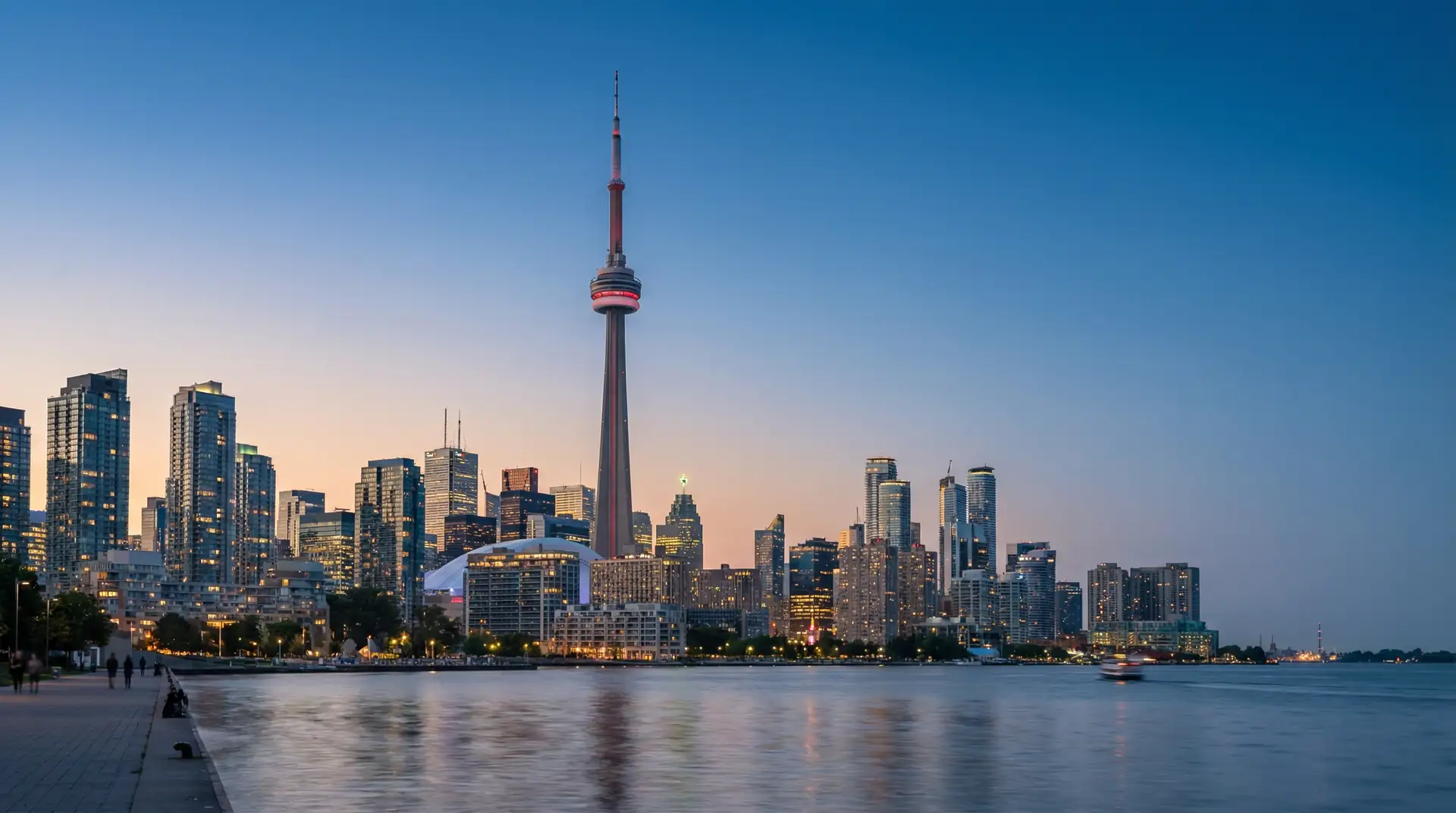
Canada Super Visa from Dubai: Parents & Grandparents Guide
What is the Canada Super Visa and who can apply from Dubai?
The Canada Super Visa is a multiple-entry visa that allows parents and grandparents of Canadian citizens or permanent residents to stay in Canada for up to 5 years per visit (updated 2022). It is valid for up to 10 years. To apply, the parent or grandparent submits an application from Dubai, while the Canadian child or grandchild must provide a signed invitation letter and proof that their household income meets or exceeds the Low Income Cut-Off (LICO) threshold for their family size. A mandatory private medical insurance policy from a Canadian provider — covering at least CAD 100,000 — must also be purchased before applying.
Key Takeaway
- The Canada Super Visa is a multiple-entry visa that allows parents and grandparents of Canadian citizens or permanent re...
- Max Stay Per Visit: 5 years (updated 2022)
- Visa Validity: Up to 10 years
- Govt. Fee: CAD 100 (~AED 275)
- Min. Insurance Coverage: CAD 100,000
If you live in Dubai and have a son or daughter who is a Canadian citizen or permanent resident, bringing your parents or grandparents for an extended visit to Canada involves a very different visa from the standard tourist visa. The Canada Super Visa was created specifically for this situation — and since a 2022 update, it allows parents and grandparents to stay in Canada for up to five years per single visit, compared to just six months on a regular Temporary Resident Visa.
For UAE-based families with relatives in Canada, the Super Visa is often the most practical pathway for long-term family reunification visits. However, it comes with requirements that go well beyond a standard tourist visa application — chief among them a mandatory medical insurance policy purchased from a Canadian insurance provider. This guide explains the entire Super Visa process from Dubai: who qualifies, what the income thresholds are, how to obtain Canadian insurance, and how long the application takes.
Whether you are the parent in Dubai hoping to visit your child in Canada, or the Canadian child looking to sponsor your parent's Super Visa application, this guide covers everything you need to know before applying.
What Is the Canada Super Visa?
The Canada Super Visa is a special type of multiple-entry visitor visa issued to parents and grandparents of Canadian citizens or permanent residents. It was introduced in 2011 as an alternative to the Parents and Grandparents Program (PGP), which is a permanent residency pathway that has a heavily oversubscribed lottery-style intake process. The Super Visa provides a practical long-stay option for families who want extended visits without pursuing permanent residency.
In 2022, the Canadian government significantly upgraded the Super Visa by extending the maximum authorised stay per visit from two years to five years. This change was retroactive for existing Super Visa holders, who could apply to extend their stay under the new rules. The 2022 update made the Super Visa one of the most generous long-stay visitor visas offered by any major destination country.
Super Visa Key Facts (2026)
- Allows parents and grandparents to stay in Canada for up to 5 years per single visit — updated from 2 years in 2022
- The visa itself is valid for up to 10 years from the date of issue (or one month before passport expiry, whichever is sooner)
- It is a multiple-entry visa — the holder can leave Canada and re-enter multiple times within the visa validity period
- Each re-entry resets the authorised stay clock — up to another 5 years per visit
- The Super Visa is not a pathway to permanent residency; holders must leave Canada or apply to extend their stay when authorised time runs out
- It does not grant the right to work or study in Canada
For Dubai-based applicants, the Super Visa application is submitted online through the IRCC portal in exactly the same way as a standard Temporary Resident Visa. The key difference lies in the additional documentation required — particularly the Canadian child's income proof and the mandatory medical insurance from a Canadian insurer.
Who Is Eligible for the Canada Super Visa?
Eligibility for the Canada Super Visa is clearly defined by IRCC. Both the applicant (the parent or grandparent) and the sponsor (the Canadian child or grandchild) must meet specific criteria. Unlike the standard TRV, where eligibility depends primarily on the applicant's own financial and personal circumstances, the Super Visa eligibility depends significantly on the Canadian family member's income.
- The applicant must be the parent or grandparent of a Canadian citizen or permanent resident — no other family relationships qualify for the Super Visa
- The Canadian child or grandchild must be 18 years of age or older
- The Canadian family member must provide a written invitation letter confirming the applicant will be financially supported during their stay
- The Canadian family member's household income must meet or exceed the Low Income Cut-Off (LICO) for their household size — see the income table in the next section
- The applicant must obtain medical insurance from a Canadian insurance company with a minimum of CAD 100,000 coverage, valid for at least one year from the date of entry
- The applicant must pass an immigration medical examination (IME) conducted by an IRCC-approved panel physician — required for all Super Visa applicants
- The applicant must not be inadmissible to Canada on criminal, health, or security grounds
- The applicant must genuinely intend to leave Canada at the end of the authorised stay — a temporary visitor intention must be established
Parents vs Grandparents — Are Both Eligible?
- Yes — both parents and grandparents of Canadian citizens or permanent residents qualify for the Super Visa
- Step-parents are also eligible if there is a genuine parent-child relationship established by law (e.g., through legal adoption or marriage)
- In-laws do not qualify for the Super Visa — only biological or legally recognised parents and grandparents
- Only one relationship tier is required — a grandparent applies on the basis of their grandchild's Canadian citizenship or PR status, regardless of whether the intermediate parent is in Canada
Super Visa vs Regular TRV: Key Differences
Many Dubai-based applicants are unsure whether to apply for a standard Temporary Resident Visa (TRV) or a Super Visa when visiting Canada for an extended family stay. The comparison below clarifies the key differences across the most important dimensions. The Super Visa is almost always the better choice for parents and grandparents planning stays longer than six months.
Super Visa vs Standard TRV — Comparison (2026)
| Feature | Super Visa | Standard TRV (Tourist Visa) |
|---|---|---|
| Who can apply | Parents and grandparents of Canadian citizens or PRs only | Any eligible visitor (tourism, business, family) |
| Max stay per visit | Up to 5 years (since 2022) | Up to 6 months (standard) |
| Visa validity | Up to 10 years (multiple entry) | Up to 10 years (multiple entry, at officer discretion) |
| Government fee | CAD 100 (~AED 275) | CAD 100 (~AED 275) |
| Biometrics fee | CAD 85 (~AED 235) | CAD 85 (~AED 235) |
| Medical insurance | MANDATORY — Canadian provider, min. CAD 100,000, min. 1 year validity | Strongly recommended, but not mandatory |
| Medical examination | MANDATORY — IRCC-approved panel physician | Only required if IRCC specifically requests it |
| Canadian sponsor required | Yes — child/grandchild must provide invitation letter and LICO income proof | No sponsor required |
| Processing time | 60–120 days (typically longer due to medical exam) | 30–60 days (standard season) |
| Renewal inside Canada | Possible via Visitor Record extension (up to 2 additional years) | Possible via Visitor Record extension (up to 6 additional months) |
| Right to work or study | No | No |
Who can apply
- Super Visa
- Parents and grandparents of Canadian citizens or PRs only
- Standard TRV (Tourist Visa)
- Any eligible visitor (tourism, business, family)
Max stay per visit
- Super Visa
- Up to 5 years (since 2022)
- Standard TRV (Tourist Visa)
- Up to 6 months (standard)
Visa validity
- Super Visa
- Up to 10 years (multiple entry)
- Standard TRV (Tourist Visa)
- Up to 10 years (multiple entry, at officer discretion)
Government fee
- Super Visa
- CAD 100 (~AED 275)
- Standard TRV (Tourist Visa)
- CAD 100 (~AED 275)
Biometrics fee
- Super Visa
- CAD 85 (~AED 235)
- Standard TRV (Tourist Visa)
- CAD 85 (~AED 235)
Medical insurance
- Super Visa
- MANDATORY — Canadian provider, min. CAD 100,000, min. 1 year validity
- Standard TRV (Tourist Visa)
- Strongly recommended, but not mandatory
Medical examination
- Super Visa
- MANDATORY — IRCC-approved panel physician
- Standard TRV (Tourist Visa)
- Only required if IRCC specifically requests it
Canadian sponsor required
- Super Visa
- Yes — child/grandchild must provide invitation letter and LICO income proof
- Standard TRV (Tourist Visa)
- No sponsor required
Processing time
- Super Visa
- 60–120 days (typically longer due to medical exam)
- Standard TRV (Tourist Visa)
- 30–60 days (standard season)
Renewal inside Canada
- Super Visa
- Possible via Visitor Record extension (up to 2 additional years)
- Standard TRV (Tourist Visa)
- Possible via Visitor Record extension (up to 6 additional months)
Right to work or study
- Super Visa
- No
- Standard TRV (Tourist Visa)
- No
The Super Visa and standard TRV carry the same government fee. The significant additional costs for the Super Visa come from mandatory Canadian medical insurance (CAD 800–2,500+ per year depending on age) and the medical examination (~AED 600–900 in Dubai).
Which Visa Should You Choose?
- Choose the Super Visa if: your parent or grandparent wants to stay in Canada longer than 6 months, or if you want the flexibility to extend stays up to 5 years per visit without repeated reapplication
- Choose a standard TRV if: the intended stay is 6 months or less and the applicant does not meet the LICO income sponsorship requirements, or if the mandatory Canadian insurance cost is prohibitive given the length of visit
- The Canadian insurance requirement is the key differentiator — for short visits under 3 months, the insurance cost may exceed what a comparable travel policy would cost for a standard TRV
- For stays of 6 months or more, the Super Visa's 5-year authorisation far outweighs the additional documentation burden
LICO Income Requirements: How Much Must the Canadian Child Earn?
One of the most searched questions about the Super Visa is: how much income does my child in Canada need to earn to sponsor my application? The answer is defined by Statistics Canada's Low Income Cut-Off (LICO) table, which sets a minimum household income threshold based on the size of the Canadian family member's household. The sponsoring child or grandchild must demonstrate that their total household income meets or exceeds 100% of the LICO for their household size, before tax.
The LICO figures below are the 2024 thresholds published by Statistics Canada and used by IRCC for Super Visa applications assessed in 2026. IRCC updates the LICO table periodically — always verify the most current figures on the official IRCC website before submitting an application.
Canada Super Visa LICO Income Thresholds by Household Size (2024 figures, used in 2026)
| Household Size | Min. Annual Income (CAD) | Approx. Min. Annual Income (AED) | Approx. Monthly Equivalent (CAD) |
|---|---|---|---|
| 1 person (child alone) | CAD 26,620 | ~AED 73,205 | ~CAD 2,218 |
| 2 persons | CAD 33,159 | ~AED 91,187 | ~CAD 2,763 |
| 3 persons | CAD 40,764 | ~AED 112,101 | ~CAD 3,397 |
| 4 persons | CAD 49,481 | ~AED 136,073 | ~CAD 4,123 |
| 5 persons | CAD 56,104 | ~AED 154,286 | ~CAD 4,675 |
| 6 persons | CAD 63,276 | ~AED 174,009 | ~CAD 5,273 |
| 7 persons | CAD 70,446 | ~AED 193,727 | ~CAD 5,871 |
| Each additional person | +CAD 7,170 | +~AED 19,718 | +~CAD 598 |
1 person (child alone)
- Min. Annual Income (CAD)
- CAD 26,620
- Approx. Min. Annual Income (AED)
- ~AED 73,205
- Approx. Monthly Equivalent (CAD)
- ~CAD 2,218
2 persons
- Min. Annual Income (CAD)
- CAD 33,159
- Approx. Min. Annual Income (AED)
- ~AED 91,187
- Approx. Monthly Equivalent (CAD)
- ~CAD 2,763
3 persons
- Min. Annual Income (CAD)
- CAD 40,764
- Approx. Min. Annual Income (AED)
- ~AED 112,101
- Approx. Monthly Equivalent (CAD)
- ~CAD 3,397
4 persons
- Min. Annual Income (CAD)
- CAD 49,481
- Approx. Min. Annual Income (AED)
- ~AED 136,073
- Approx. Monthly Equivalent (CAD)
- ~CAD 4,123
5 persons
- Min. Annual Income (CAD)
- CAD 56,104
- Approx. Min. Annual Income (AED)
- ~AED 154,286
- Approx. Monthly Equivalent (CAD)
- ~CAD 4,675
6 persons
- Min. Annual Income (CAD)
- CAD 63,276
- Approx. Min. Annual Income (AED)
- ~AED 174,009
- Approx. Monthly Equivalent (CAD)
- ~CAD 5,273
7 persons
- Min. Annual Income (CAD)
- CAD 70,446
- Approx. Min. Annual Income (AED)
- ~AED 193,727
- Approx. Monthly Equivalent (CAD)
- ~CAD 5,871
Each additional person
- Min. Annual Income (CAD)
- +CAD 7,170
- Approx. Min. Annual Income (AED)
- +~AED 19,718
- Approx. Monthly Equivalent (CAD)
- +~CAD 598
Household size includes all persons normally residing in the Canadian sponsor's home — the sponsor, their spouse or common-law partner, dependent children, and the parent or grandparent who will be visiting. AED conversions use the approximate rate of CAD 1 = AED 2.75 (February 2026). Verify current LICO figures at canada.ca/immigration before applying.
The household size calculation is where many applicants make errors. The LICO household count must include the visiting parent or grandparent as a member of the household, even though they are not yet in Canada. For example: if the Canadian child lives with their spouse and two children — a household of four — and one parent is applying for a Super Visa, the relevant LICO threshold is for a household of five persons (CAD 56,104 per year), not four.
- Income is calculated as total household income before taxes — not just the sponsor's salary alone; a working spouse's income can be included
- Acceptable income proof documents: Notice of Assessment (NOA) from the Canada Revenue Agency (CRA) for the most recent tax year, T4 slips, current employment letters with annual salary stated, and recent pay stubs
- Self-employed Canadian sponsors must provide their NOA along with business financial statements to demonstrate total household income
- Investment income, rental income, and government benefits that form part of regular household income may be included
- The income requirement must be met at the time of application — not just projected future income
- If the Canadian sponsor's income falls short of the LICO threshold, the application is not automatically refused — but applicants should seek professional advice, as supplementary financial evidence may help in borderline cases
Medical Insurance: The Critical Super Visa Requirement
The single most important requirement that distinguishes the Super Visa from a standard TRV — and the one most frequently misunderstood by Dubai applicants — is the mandatory medical insurance from a Canadian insurance company. This is not optional, and insurance purchased from a UAE or international provider does not satisfy the requirement even if the coverage amount is sufficient.
- The policy must be purchased from a Canadian insurance company — UAE travel insurance, international travel insurance, and GCC-based policies do not qualify
- Minimum coverage: CAD 100,000 for healthcare, hospitalisation, and repatriation
- Minimum validity: at least one year from the intended date of entry into Canada — not one year from the date of purchase
- The policy must be valid when you submit the application — IRCC may reject applications where the insurance start date has not yet arrived
- The insurance certificate or confirmation letter must be included in the Super Visa application document package
- If the Super Visa holder extends their stay inside Canada beyond one year, the insurance must be renewed to maintain coverage throughout the visit
Estimated Annual Super Visa Insurance Premiums by Applicant Age
| Applicant Age | Estimated Annual Premium (CAD) | Estimated Annual Premium (AED) | Notes |
|---|---|---|---|
| 50–54 years | CAD 800–1,200 | ~AED 2,200–3,300 | Lowest age band; healthier applicants pay less |
| 55–59 years | CAD 1,000–1,600 | ~AED 2,750–4,400 | Premiums rise noticeably in this band |
| 60–64 years | CAD 1,200–2,000 | ~AED 3,300–5,500 | Most common age band for Super Visa applicants |
| 65–69 years | CAD 1,600–2,500 | ~AED 4,400–6,875 | Pre-existing conditions significantly affect cost |
| 70–74 years | CAD 2,200–3,500 | ~AED 6,050–9,625 | Some insurers exclude applicants over 70 or 75 |
| 75+ years | CAD 3,000–5,000+ | ~AED 8,250–13,750+ | Limited insurer options; must disclose pre-existing conditions |
50–54 years
- Estimated Annual Premium (CAD)
- CAD 800–1,200
- Estimated Annual Premium (AED)
- ~AED 2,200–3,300
- Notes
- Lowest age band; healthier applicants pay less
55–59 years
- Estimated Annual Premium (CAD)
- CAD 1,000–1,600
- Estimated Annual Premium (AED)
- ~AED 2,750–4,400
- Notes
- Premiums rise noticeably in this band
60–64 years
- Estimated Annual Premium (CAD)
- CAD 1,200–2,000
- Estimated Annual Premium (AED)
- ~AED 3,300–5,500
- Notes
- Most common age band for Super Visa applicants
65–69 years
- Estimated Annual Premium (CAD)
- CAD 1,600–2,500
- Estimated Annual Premium (AED)
- ~AED 4,400–6,875
- Notes
- Pre-existing conditions significantly affect cost
70–74 years
- Estimated Annual Premium (CAD)
- CAD 2,200–3,500
- Estimated Annual Premium (AED)
- ~AED 6,050–9,625
- Notes
- Some insurers exclude applicants over 70 or 75
75+ years
- Estimated Annual Premium (CAD)
- CAD 3,000–5,000+
- Estimated Annual Premium (AED)
- ~AED 8,250–13,750+
- Notes
- Limited insurer options; must disclose pre-existing conditions
Premiums are indicative and vary by insurer, the applicant's health status, whether pre-existing conditions are included or excluded, and the deductible chosen. A higher deductible (e.g., CAD 1,000 or CAD 3,000) reduces the premium. OraVisa recommends obtaining quotes from at least two Canadian insurers before purchasing. AED conversions at CAD 1 = AED 2.75.
Insurance Is the Key Differentiator — Plan for It First
- Obtain your Canadian insurance quote before deciding whether the Super Visa is financially viable — premium costs vary dramatically by age
- Applicants over 70 should confirm their insurer's age limit and pre-existing condition policy before purchasing, as some Canadian insurers cap coverage at age 70 or 75
- A policy with a higher deductible (e.g., CAD 3,000) can reduce annual premiums by 20–40% — suitable for applicants who can self-fund minor medical costs
- The insurance certificate must be in English or French; if the insurer provides a certificate in another language, a certified translation is required
- Well-known Canadian insurers for Super Visa coverage include Manulife, Sun Life, Allianz Canada, and Blue Cross — compare multiple quotes before committing
Documents Required for the Super Visa Application from Dubai
The Super Visa requires all the standard TRV documents, plus a significant set of additional documents from both the applicant in Dubai and the Canadian sponsor. Organising both sides of the document package is essential — IRCC will not issue a Super Visa without the sponsoring Canadian family member's income and invitation documentation.
Canada Super Visa Document Checklist — Dubai Applicants (2026)
| Document | Required From | Notes |
|---|---|---|
| Valid passport (6+ months validity) | Applicant (Dubai) | Scan all pages including previous visas |
| UAE residence visa and Emirates ID | Applicant (Dubai) | Confirms legal UAE residency during the application period |
| Two IRCC-spec passport photographs | Applicant (Dubai) | 35mm × 45mm, white background, taken within 6 months |
| Completed IMM 5257 application form | Applicant (Dubai) | Submitted via IRCC online portal |
| Completed IMM 5645 Family Information Form | Applicant (Dubai) | Lists all immediate family members |
| IRCC application fee receipt (CAD 100) | Applicant (Dubai) | Paid online; non-refundable |
| Biometrics fee receipt (CAD 85) + appointment | Applicant (Dubai) | Collected at VFS Canada Dubai |
| Medical insurance certificate | Applicant (Dubai) | Canadian provider, min. CAD 100,000, min. 1-year validity from entry date |
| Immigration Medical Examination (IME) results | Applicant (Dubai) | Conducted by IRCC-approved panel physician in Dubai; results uploaded by physician directly to IRCC |
| Signed invitation letter from Canadian child/grandchild | Canadian Sponsor | Must confirm applicant will be financially supported and has a place to stay |
| Proof of Canadian status (passport, PR card) | Canadian Sponsor | Confirms the sponsor is a Canadian citizen or permanent resident |
| Proof of household income meeting LICO | Canadian Sponsor | Most recent NOA from CRA, T4 slips, employment letter with annual salary |
| Proof of Canadian address | Canadian Sponsor | Utility bill, bank statement, or government correspondence at Canadian address |
| Bank statements of applicant (UAE, 3–6 months) | Applicant (Dubai) | Demonstrates financial stability; shows applicant is not financially destitute |
| Cover letter / purpose of visit letter | Applicant (Dubai) | Strongly recommended; explains the visit purpose and intention to return to UAE |
Valid passport (6+ months validity)
- Required From
- Applicant (Dubai)
- Notes
- Scan all pages including previous visas
UAE residence visa and Emirates ID
- Required From
- Applicant (Dubai)
- Notes
- Confirms legal UAE residency during the application period
Two IRCC-spec passport photographs
- Required From
- Applicant (Dubai)
- Notes
- 35mm × 45mm, white background, taken within 6 months
Completed IMM 5257 application form
- Required From
- Applicant (Dubai)
- Notes
- Submitted via IRCC online portal
Completed IMM 5645 Family Information Form
- Required From
- Applicant (Dubai)
- Notes
- Lists all immediate family members
IRCC application fee receipt (CAD 100)
- Required From
- Applicant (Dubai)
- Notes
- Paid online; non-refundable
Biometrics fee receipt (CAD 85) + appointment
- Required From
- Applicant (Dubai)
- Notes
- Collected at VFS Canada Dubai
Medical insurance certificate
- Required From
- Applicant (Dubai)
- Notes
- Canadian provider, min. CAD 100,000, min. 1-year validity from entry date
Immigration Medical Examination (IME) results
- Required From
- Applicant (Dubai)
- Notes
- Conducted by IRCC-approved panel physician in Dubai; results uploaded by physician directly to IRCC
Signed invitation letter from Canadian child/grandchild
- Required From
- Canadian Sponsor
- Notes
- Must confirm applicant will be financially supported and has a place to stay
Proof of Canadian status (passport, PR card)
- Required From
- Canadian Sponsor
- Notes
- Confirms the sponsor is a Canadian citizen or permanent resident
Proof of household income meeting LICO
- Required From
- Canadian Sponsor
- Notes
- Most recent NOA from CRA, T4 slips, employment letter with annual salary
Proof of Canadian address
- Required From
- Canadian Sponsor
- Notes
- Utility bill, bank statement, or government correspondence at Canadian address
Bank statements of applicant (UAE, 3–6 months)
- Required From
- Applicant (Dubai)
- Notes
- Demonstrates financial stability; shows applicant is not financially destitute
Cover letter / purpose of visit letter
- Required From
- Applicant (Dubai)
- Notes
- Strongly recommended; explains the visit purpose and intention to return to UAE
All documents must be in English or French, or accompanied by a certified translation. IRCC may request additional documents at their discretion. The medical examination must be completed before the Super Visa application is submitted.
Application Process from Dubai: Step by Step
The Super Visa application from Dubai follows the same IRCC online portal process as a standard TRV, with additional steps for the medical examination and Canadian insurance. Coordination between the applicant in Dubai and the Canadian sponsor is essential — the Canadian sponsor's documents must be ready before the Dubai applicant submits.
- 1Step 1 — Obtain Canadian medical insurance: Purchase a qualifying policy from a Canadian insurance provider before doing anything else. The insurance certificate is required at the time of application submission. Confirm the policy start date aligns with your planned entry date into Canada.
- 2Step 2 — Gather documents from the Canadian sponsor: The Canadian child or grandchild must prepare their signed invitation letter, proof of Canadian citizenship or PR status, most recent Notice of Assessment (NOA) from the CRA, T4 slips, and proof of their Canadian address. These are collected by the Dubai applicant and uploaded to the IRCC portal.
- 3Step 3 — Book and complete the Immigration Medical Examination (IME) in Dubai: Visit an IRCC-approved panel physician in Dubai for the medical examination. The physician uploads the results directly to IRCC — you do not receive a paper copy of your medical report. The IME is valid for 12 months. Complete this before submitting your online application, or IRCC will instruct you to do so after submission (which delays processing).
- 4Step 4 — Create an IRCC online account and start the application: At ircc.canada.ca, create or log into your secure IRCC account. Use the online eligibility tool to confirm the Super Visa is the correct application type for your situation.
- 5Step 5 — Complete the application forms (IMM 5257 and IMM 5645): Fill in the Temporary Resident Visa form (IMM 5257) and the Family Information Form (IMM 5645). Answer every question; incomplete forms cause delays.
- 6Step 6 — Upload all documents: Attach digital scans of all required documents for both the applicant and the Canadian sponsor. Use clear, legible PDFs. Double-check that the insurance certificate, IME reference number, and all sponsor documents are included.
- 7Step 7 — Pay the IRCC fee (CAD 100) and biometrics fee (CAD 85): Both fees are paid online via credit or debit card during the application submission process. All fees are non-refundable.
- 8Step 8 — Submit the application and receive the Biometric Instruction Letter (BIL): After submission, IRCC will email you a BIL instructing you to book a biometrics appointment at VFS Canada Dubai. You must attend biometrics within 30 days of receiving the BIL.
- 9Step 9 — Attend biometrics at VFS Canada Dubai: Book an appointment at the VFS Canada Visa Application Centre in Dubai (Barsha Heights / TECOM area). Bring your passport, BIL, and appointment confirmation. Biometrics takes approximately 15–20 minutes.
- 10Step 10 — Wait for the IRCC decision: After biometrics, IRCC reviews your application. Processing typically takes 60–120 days for Super Visa applications. If approved, IRCC will request your passport for visa stamping via VFS Dubai.
OraVisa recommends completing the medical examination and purchasing the insurance before starting the IRCC online application. Both items are typically the longest-lead elements — the IME appointment can take one to two weeks to arrange at Dubai panel clinics, and purchasing insurance requires comparing quotes across multiple Canadian providers.
Processing Time and What to Expect After Submission
Super Visa applications from Dubai take longer to process than standard TRV applications. The additional document review — particularly the medical examination results from the panel physician and the Canadian sponsor's income verification — adds time to the assessment process.
Canada Super Visa Processing Times from Dubai (2026)
| Scenario | Estimated Processing Time | Notes |
|---|---|---|
| Standard application, complete documents, low season | 60–90 days | Best-case scenario with all documents submitted correctly at first attempt |
| Standard application, peak season (Jun–Aug, Dec–Jan) | 90–120 days | Higher application volumes; apply well in advance of planned travel |
| Application requiring additional document request | 120–150 days or more | IRCC may request clarification on income, insurance, or IME results |
| Application with medical inadmissibility review | Varies widely — 3–6 months+ | If the IME flags a health condition requiring review by IRCC medical officers |
Standard application, complete documents, low season
- Estimated Processing Time
- 60–90 days
- Notes
- Best-case scenario with all documents submitted correctly at first attempt
Standard application, peak season (Jun–Aug, Dec–Jan)
- Estimated Processing Time
- 90–120 days
- Notes
- Higher application volumes; apply well in advance of planned travel
Application requiring additional document request
- Estimated Processing Time
- 120–150 days or more
- Notes
- IRCC may request clarification on income, insurance, or IME results
Application with medical inadmissibility review
- Estimated Processing Time
- Varies widely — 3–6 months+
- Notes
- If the IME flags a health condition requiring review by IRCC medical officers
Processing times begin from the date of biometrics enrollment, not the date of online submission. IRCC publishes estimated processing times on canada.ca — always check current figures. OraVisa recommends applying at least 4–5 months before the intended Canada travel date for a Super Visa.
- The 12-month validity clock on both the medical insurance and the IME starts from fixed dates — co-ordinate both so that the insurance validity and the IME results do not expire before the visa is issued
- IRCC does not offer express or priority processing for Super Visa applications from Dubai
- If IRCC requests additional documents (a procedural fairness letter), the applicant typically has 30 days to respond — OraVisa monitors client applications to respond promptly
- Once approved, IRCC will request the applicant's passport to be submitted at VFS Dubai for visa stamping — allow 5 to 10 additional business days for passport collection
- The Super Visa stamp in the passport will show the visa validity period (up to 10 years) and confirm it is a multiple-entry visa; the authorised stay per visit (up to 5 years) is not pre-stamped but is confirmed at the port of entry in Canada
Apply for a Canada Super Visa Through OraVisa
The Super Visa involves more moving parts than any other Canada visa category — a medical examination in Dubai, insurance sourced from a Canadian provider, income verification from a Canadian family member, and a coordinated submission across two countries. OraVisa's Canada visa team prepares the full Super Visa file with Dubai-based applicants and their Canadian sponsors — document preparation, cover letter, and booking the VFS biometrics appointment; you attend it in person.
- LICO eligibility check — we confirm whether the Canadian sponsor's household income meets the threshold for the applicable household size before you invest in insurance or medical examination fees
- Canadian insurance sourcing — we provide guidance on qualifying Canadian insurers, help compare quotes by age and health profile, and confirm that the chosen policy meets IRCC's requirements
- Medical examination coordination — we refer applicants to IRCC-approved panel physicians in Dubai and advise on timing relative to the application submission
- Complete document preparation — we prepare and review the full document package for both the Dubai applicant and the Canadian sponsor, ensuring nothing is missing
- IRCC portal submission — we complete and submit the IMM 5257 and IMM 5645 forms, upload all documents, and process the fee payments
- Biometrics appointment at VFS Canada Dubai — we book your slot, and we provide a complete appointment briefing
- Application tracking — we monitor the IRCC application portal and respond to any additional information requests within the deadline
Ready to Apply for a Canada Super Visa from Dubai?
Get help preparing the Super Visa file end to end — from LICO eligibility check and Canadian insurance guidance to IRCC form preparation and booking your VFS biometrics appointment; you attend it in person. Get a free, no-obligation consultation today.
Get Free QuoteSources
- Immigration, Refugees and Citizenship Canada (IRCC), Super Visa for Parents and Grandparents— Verified February 2026
- Statistics Canada, Low Income Cut-Offs (LICO) — 2024 Before-Tax Thresholds— Verified February 2026
Frequently Asked Questions
What is the difference between the Canada Super Visa and a regular tourist visa?
The key differences are duration, eligibility, and requirements. A standard Temporary Resident Visa (TRV) allows any eligible visitor to stay in Canada for up to 6 months per visit and requires no Canadian sponsor or medical insurance. The Super Visa is exclusively for parents and grandparents of Canadian citizens or permanent residents, allows stays of up to 5 years per visit (updated in 2022), requires the Canadian child or grandchild to meet a LICO income threshold, and mandates the purchase of private medical insurance from a Canadian insurance company with at least CAD 100,000 in coverage valid for at least one year. Both visas carry the same government application fee of CAD 100.
How much income does my child in Canada need to earn to sponsor a Super Visa?
The Canadian sponsor's household income must meet or exceed the Low Income Cut-Off (LICO) for their household size, which includes the visiting parent or grandparent as a household member. For a 2026 application based on 2024 LICO figures: a household of 2 requires CAD 33,159 per year; a household of 3 requires CAD 40,764 per year; a household of 4 requires CAD 49,481 per year; and a household of 5 requires CAD 56,104 per year. Income from both the sponsor and their spouse or common-law partner can be combined. Proof is typically provided via a Notice of Assessment (NOA) from the Canada Revenue Agency for the most recent tax year.
Does the medical insurance for a Canada Super Visa have to be from a Canadian company?
Yes. IRCC specifically requires that Super Visa medical insurance be purchased from a Canadian insurance company. UAE travel insurance, international multi-destination travel insurance, and GCC-based policies do not satisfy this requirement even if the coverage amount exceeds CAD 100,000. The policy must provide a minimum of CAD 100,000 in emergency medical coverage and must be valid for at least one year from the date of entry into Canada. Well-known Canadian insurers offering Super Visa coverage include Manulife, Sun Life, Allianz Canada, and Blue Cross Canada. OraVisa can advise on sourcing qualifying insurance from Dubai.
Do I need a medical exam for the Canada Super Visa from Dubai?
Yes. An Immigration Medical Examination (IME) is mandatory for all Super Visa applicants, regardless of age or nationality. The exam must be conducted by an IRCC-approved panel physician in Dubai or Abu Dhabi. The physician submits the results directly to IRCC electronically — you do not handle the medical report yourself. The cost for an IME at a Dubai panel clinic is approximately AED 600 to AED 900, covering a physical examination, blood tests (HIV and syphilis), and a chest X-ray. IME results are valid for 12 months. Arrange the examination early, as completing it before submitting your IRCC application is strongly recommended.
How long does a Canada Super Visa take to process from Dubai?
Super Visa applications from Dubai typically take 60 to 120 days to process after biometrics enrollment at VFS Canada Dubai. Processing times are longer than for standard TRVs because IRCC must review the medical examination results, verify the Canadian sponsor's income, and confirm the insurance documentation. During peak periods (June to August and December to January), processing can extend beyond 120 days. OraVisa advises applying at least 4 to 5 months before the intended Canada travel date. There is currently no express or priority processing lane for Super Visa applications from Dubai.
Can the Super Visa be extended inside Canada?
Yes. If a Super Visa holder wishes to stay in Canada beyond their initially authorised period (up to 5 years per visit), they can apply for a Visitor Record extension from within Canada before their current authorised stay expires. Extensions are assessed by IRCC and are not guaranteed. The applicant must also ensure their medical insurance is renewed to cover the extended stay. Extensions can add up to 2 additional years per approved extension. The Super Visa itself remains valid for up to 10 years from the issue date, so the holder can re-enter Canada after a trip abroad without needing to apply for a new visa.
Can grandparents of Canadian permanent residents (not just citizens) apply for the Super Visa?
Yes. The Super Visa is open to parents and grandparents of both Canadian citizens and Canadian permanent residents. The Canadian sponsor does not need to be a citizen — a valid permanent resident (PR) card is sufficient to establish eligibility. The Canadian sponsor must still meet the LICO income threshold for their household size and provide a signed invitation letter, proof of Canadian status (PR card or Canadian passport), and proof of household income regardless of whether they are a citizen or a permanent resident.
Need Expert Visa Assistance?
OraVisa handles everything from document preparation to submission; you attend in person only where the mission requires biometrics or an interview. Get a free consultation today.
Get Free ConsultationTools to Help You Prepare
Get a personalised list of every document you need for this visa.
See a full cost breakdown — government fees, VFS charges & more in AED.
Check standard, express & peak processing times and when to apply.
All tools are free — no login required. View all tools →
Related Visa Guides
Latest Visa Updates
Written by
Priya Sharma
Senior Visa Consultant — Asia & Americas
Senior Visa Consultant specializing in Asian & American destinations. 8 years of experience with a proven track record in complex multi-country applications.
Expert reviewed by Ahmed Al Rashid
Senior Visa Consultant
Last updated: · 12+ years of visa consultancy experience
Last updated: